NGC 2623

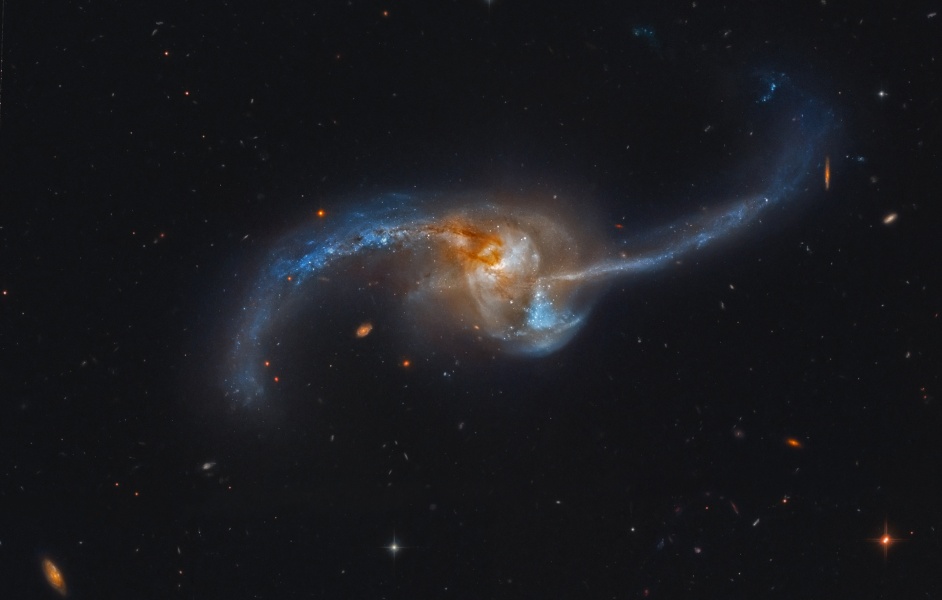
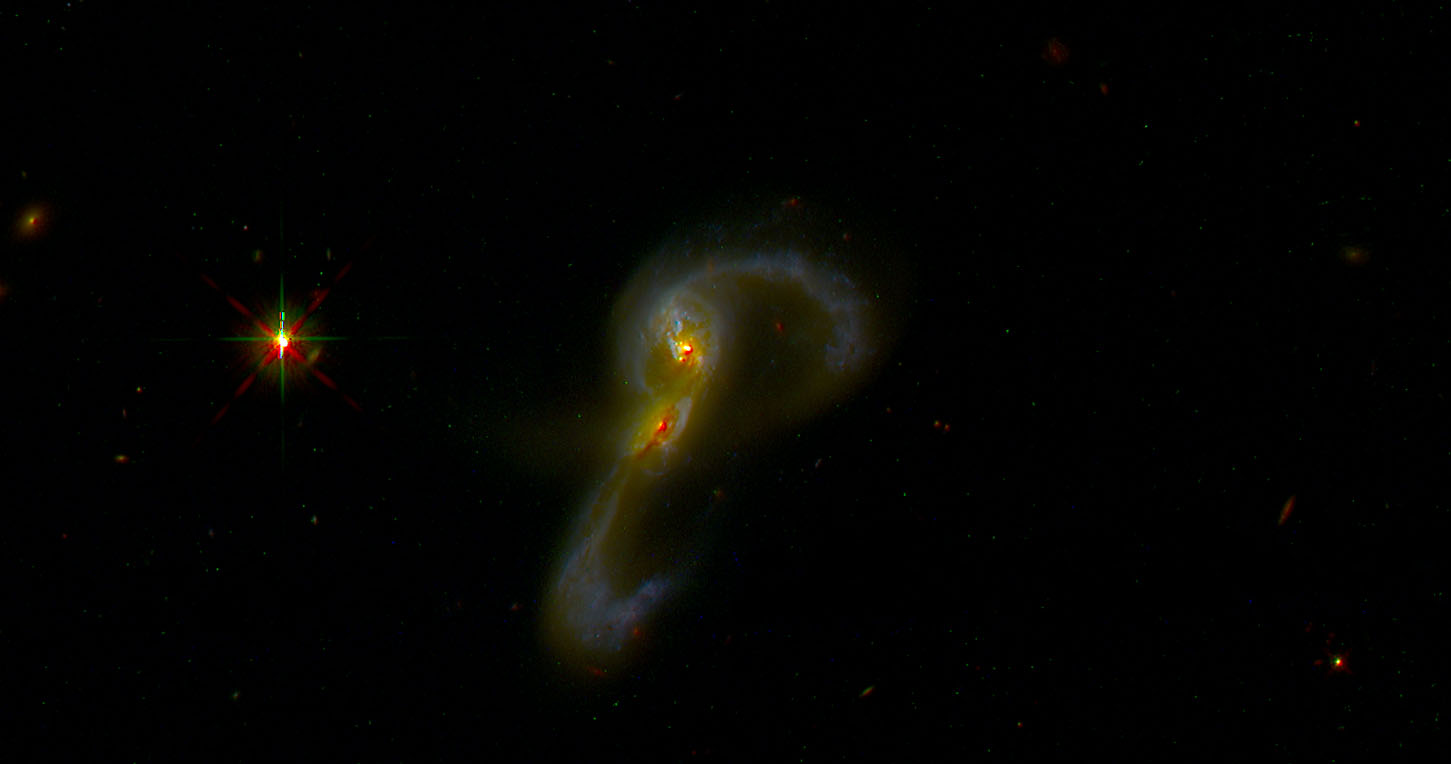
I’ve been making my way through Leung’s PSB sample and noticed this exceptionally interesting “CPSB” sample member, which oddly enough they chose not to include in their analysis. This is NGC 2623, a rather famous merging galaxy pair that was one of Toomre‘s exemplars of a late stage merger. This is a well studied system, with over 500 references listed in NED and observations apparently in every electromagnetic frequency range for which telescopes exist (nothing from JWST yet though).

NGC 2623 – Astronomy Picture of the Day 2012 October 19Image Credit: Hubble Legacy Archive, ESA, NASA; ProcessingMartin Pugh

MaNGA targeted it with one of their largest IFUs, which covers most of the visible light (at the depth of SDSS imaging) of the merger remnant, but very little of the tidal tails. There’s also a CALIFA IFU dataset with a larger spatial footprint but lower spectral resolution. I haven’t looked at that in detail yet except to estimate the relative velocity field..

As usual I work with RSS spectra stacked and binned to a target S/N. For this final post starburst project I’m trying to set a higher S/N threshold. In this case I ended up with 214 spectra with S/N per pixel ranging from 8.5 to 42.5.

MaNGA plateifu 9507-12704, mangaid 1-605367

Kinematics

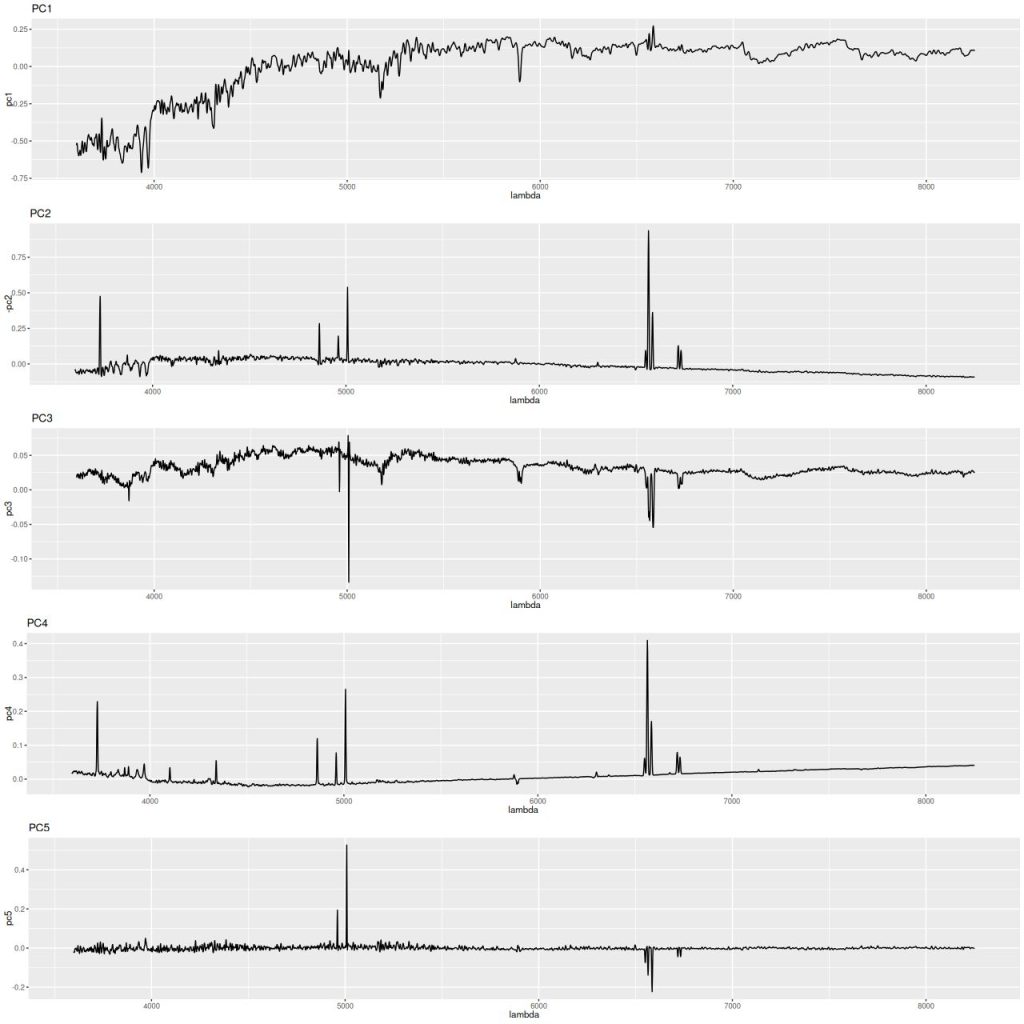
I’ll first discuss the stellar and gas kinematics, since calculating redshift offsets is the first thing I do after loading data and binning to a target S/N. I use a straightforward template matching procedure using as templates a set of 15 eigenspectra that I computed some years ago using an algorithm published by Blanton and Roweis (2007) and a fairly large sample of SDSS galaxy spectra. The first 5 are shown below. The first two look like real spectra of a passively evolving ETG and a star forming galaxy respectively. The rest represent departures from these archetypes. I did not mask emission lines, so both absorption and emission lines are present, often with the opposite of expected signs.

First 5 eigenspectra used as templates for calculating redshift offsets

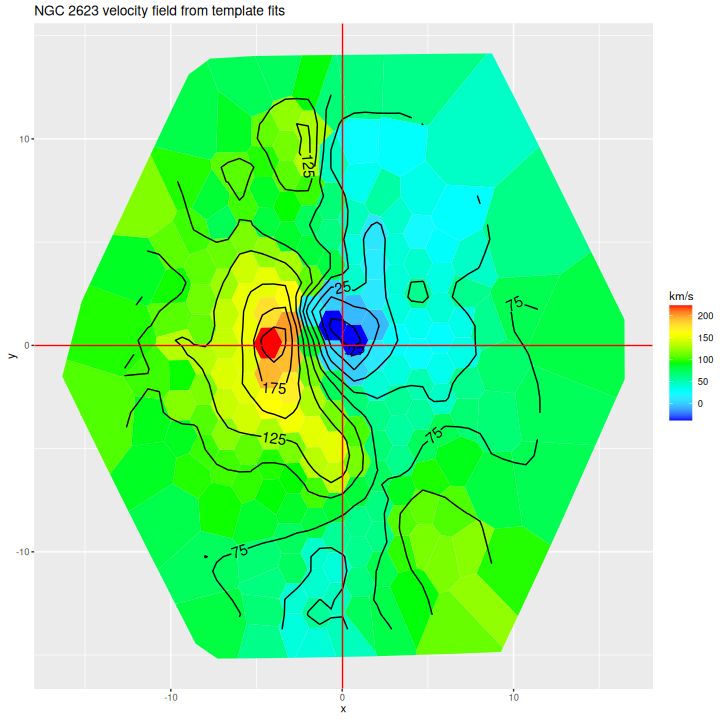
Here is the computed velocity field (converted from redshift offsets from the published system redshift of z=0.01818). As I’ve said before and is obviously the case from the plot above the template fitting procedure gives a blended velocity estimate that in any given spectrum might be dominated by emission, absorption, or a combination. In this case it turns out that emission lines dominate in the IFU center, with the outer parts dominated by stellar motion.

NGC 2623 (MaNGA plateifu 9507-12704)
velocity field from template fit

I often check Marvin to compare MaNGA data analysis pipeline measurements to mine. Sometimes visual comparisons are hampered by unfortunate choices of color palettes by the Marvin team. That’s especially the case for velocities where they use shades of red, white, and blue to represent positive, ~ 0, and negative velocities. It was apparent though that the stars and gas are kinematically decoupled at least in the center.

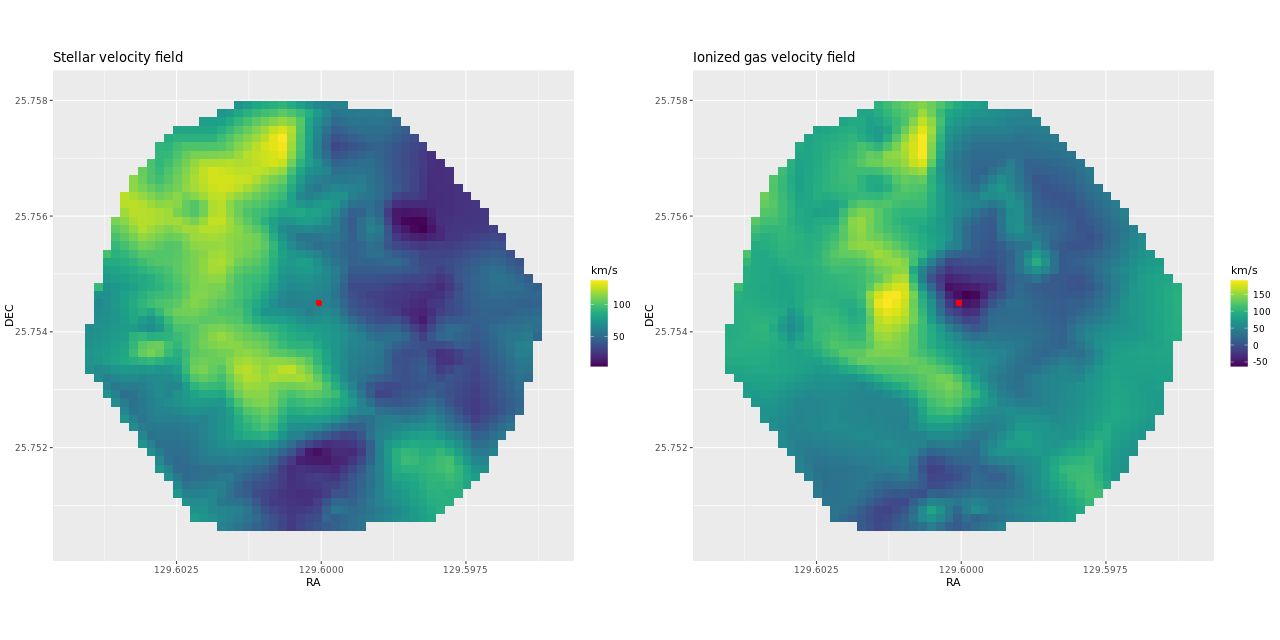
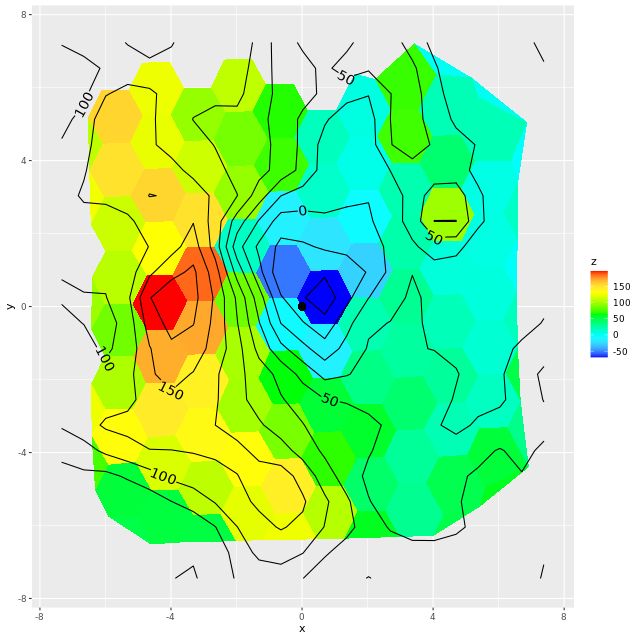
To investigate further I decided to dust off my old code for non-parametric line of sight velocity distribution modeling1which I last wrote about here and several previous posts., made some small modifications, and ran on the same 214 binned spectra. The results for the mean velocity offsets from the system redshift are shown below for stars (L) and gas (R). For easier comparison to Marvin I interpolated the model outputs to 0.5″ x 0.5″ pixels.

Even though people who claim to know generally disapprove of the use of rainbows in graphics I like to use them for velocity maps. In this case though using a more perceptually uniform palette (viridis with 256 levels) reveals some interesting details that aren’t as evident with a rainbow palette.

NGC 2623 (MaNGA plateifu 9507-12704) Estimated stellar and ionized gas velocity distributions.

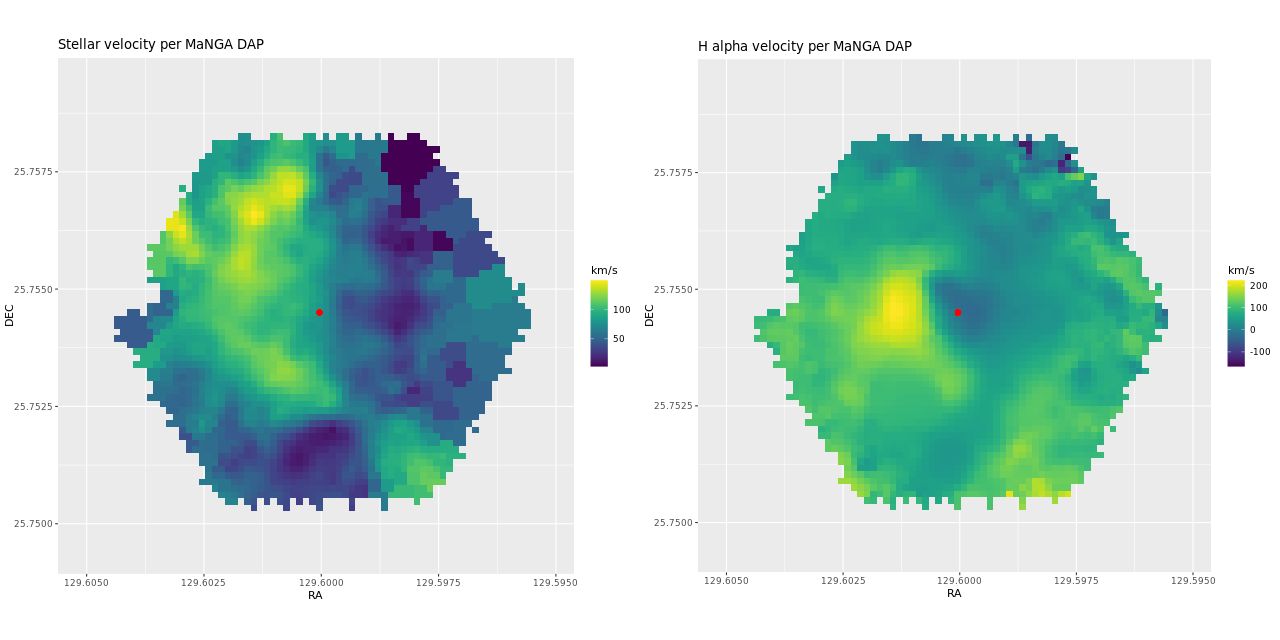
I also downloaded the maps from Skyserver that are displayed in Marvin. Below are the stellar and Hα velocity plots2[N II] 6584 might have been a better choice since it’s brighter than Hα over most of the galaxy.. I haven’t tried a detailed quantitative comparison because it’s not easy to properly register the maps, but it’s evident that these are very similar.

NGC 2623 (MaNGA plateifu 9507-12704) Estimated stellar and ionized gas velocity distributions from MaNGA DAP.

The velocity maps have several interesting features. First, the ionized gas is rapidly rotating within the inner ~2 kpc, but there’s no apparent organized rotation farther out. Zooming in on the center the rotation axis appears to be offset to the east of the IFU center (marked), which is exactly at the position of the nucleus, by ≈ 1.6″ (800 pc) if the unlabelled 75 km/sec contour line is taken as the axis of rotation. In a very thorough analysis of IFU data that preceded MaNGA by more than a decade Lipari et al. (2004) also noted a displacement of the kinematic center of 1.1″ to the east of the nucleus — in good agreement with my estimate given the limited resolution of MaNGA data. There also appears to be good qualitative agreement on gas velocities in the area with overlapping observations, which is roughly the zoomed in region below (see their figure 8a). NGC 2623 was also observed in the CALIFA survey, and its kinematics are discussed in Barrera-Ballesteros et al. (2015). Their velocity fields appear broadly similar, but visual comparison is hampered by the small size of their figures.

Outside the nuclear region gas and stellar velocities are more nearly equal although with some scatter that may simply be due to measurement errors.

A minor point that’s maybe worth noting is the overall mean velocity in both the stellar and gas measurements is ≈70 km/sec, which suggests the system redshift of z = 0.01818 adopted by MaNGA is low by ≈2×10⁻⁴, or z = 0.01842 (cz = 5522 km/sec). This is close to the fiducial heliocentric redshift of 0.01851 adopted by NED and well within the range of values listed there.

Two features I find really interesting that are especially prominent in the stellar velocity map are a pair of long, irregular, but mostly connected arcs that stretch across the full width of the IFU. One arc is relatively redshifted, exiting (entering?) the IFU at the position of the small portion of the SW tidal tail that’s within the footprint, appears to cross the other arc, then stretches to the south and east of the nuclear region, terminating to the north approximately where the northern tidal tail enters the IFU footprint. The other, relatively blue shifted arc starts in the south in the area of the blue, wedge shaped region (which I will discuss much more later), curves around to the west of the nuclear region, and appears to terminate somewhere in the NW region of the IFU.

To date there is only one N-body simulation of the NGC 2623 merger, by Privon et al. (2013). In their model the blue wedge in the south is material from the progenitor that formed the northern tidal tail, has passed through the main body and is now falling back in. In their simulations there are regions even in the main body of the merger remnant where the progenitors aren’t well mixed. I’m wondering if these apparently connected regions with systematic velocity offsets might reflect that lack of complete mixing, with the blue shifted regions falling into the galaxy from behind and the redshifted falling from above.

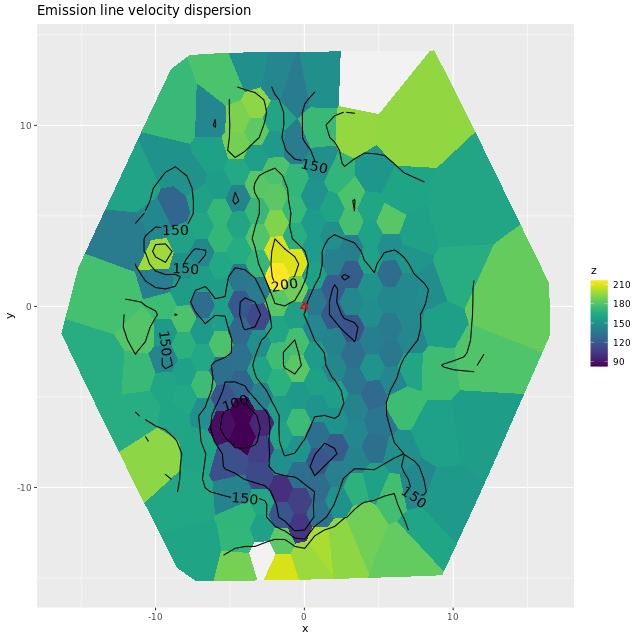
One final plot for now: the average emission line velocity dispersion. These are “raw” values uncorrected for spectral resolution. The relatively high values to the NE of the nucleus might be associated with the outflow discovered by Lipari et al. The low values well south of the nucleus are from H II regions.

NGC 2623 (MaNGA plateifu 9507-12704) mean Ionized gas velocity dispersion

This post turned out longer and took longer to write than I expected, so I will break it up into two or perhaps more. Next time I’ll look at some other physical properties and perhaps model star formation histories.

Update

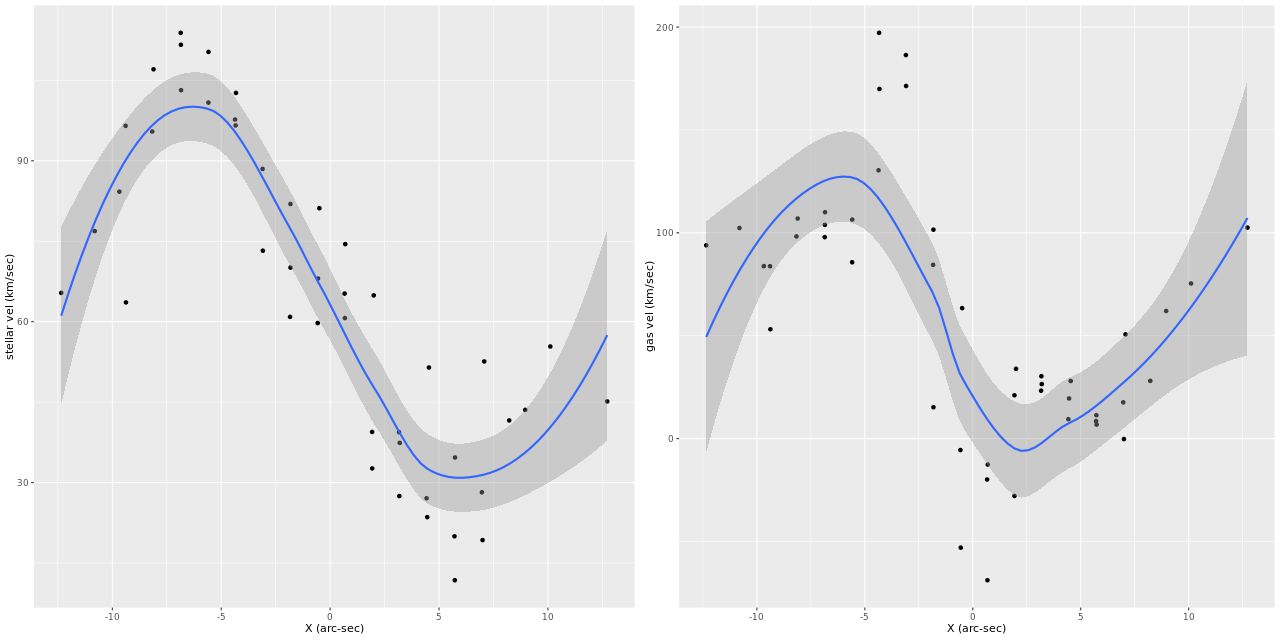
Barrera-Ballesteros found regular stellar rotation out to the maximum radius of 6″ (2.2 kpc) that they had usable data. Both they and Lipari found a sinusoidal rotation curve for the ionized gas. I was skeptical of the claimed large scale stellar rotation since visual inspection of the velocity maps didn’t show an obvious velocity gradient in any direction. But, I decided to take a closer look anyway. Since the kinematic position angle for both is close enough to 90o I just plotted velocities for bins within ±2″ of the horizontal axis. The results are plotted separately for stars (L) and gas (R). The curved lines with “confidence bands” are loess fits to the plotted data and should absolutely not be taken seriously as a model of the rotation curves. It’s notable though that if’s fairly symmetrical for the stellar velocities and if the true system velocity is 70 km/sec larger than adopted by MaNGA its kinematic center is right at the IFU center. The ionized gas kinematic center is clearly seen as offset to the east, as noted above.

NGC 2623 (MaNGA plateifu 9507-12704) – Stellar and gas velocities within 2″ of the X axis

A small course change

After a bit of a break caused by spiking electricity bills and travel I’ve resumed the program I discussed in my last post, but with a change in the sample I’m drawing from. While traveling a few months back I noticed a (now published) preprint on arxiv titled “The diverse quenching pathways of post-starburst galaxies in SDSS-IV MaNGA,” by Leung et al. (2025). This was a companion to Leung et al. (2024) and evidently part of the first author’s PhD research. These two papers studied “ring” and “central” post starburst galaxies (RPSB and CPSB), a morphological dichotomy originally noted in Chen et al. (2019), and studied further with data from the final MaNGA data release by Cheng et al. (2024)1The author lists for these 4 papers overlap. A third category of “irregular” psbs hasn’t received much attention, probably because the majority of those are likely to just be spiral galaxies observed with enough resolution to sample interarm regions.

The two papers by Leung et al. were of interest for a couple of reasons. First, they published catalogs of their sample as supplemental data to the journal papers, and the sample was reasonably sized for my resources: a total of 91, with 50 cpsbs and 41 rpsbs. This is comparable size to the 103 SDSS selected K+A candidates that I started to run models for, and there is some overlap in objects: 17 of my sample are in the cpsb sample, and 3 in the rpsbs. In addition 6 out of 8 of Melnick and dePropris’ SDSS based compilation are in the cpsbs, and 9 are drawn from the PSB ancillary program sample.

Another point of interest was they published star formation history models for their entire sample (minus a few that they chose not study further). Their methods are quite different from mine and I have no intention of trying to reproduce their work in any detail, but it will be of some interest to see if burst timescales and strength are at all comparable.

Modeling the chemical evolution of the stars through the bursts was an important part of these papers. Although I was and remain skeptical of the ability of my models to say much about stellar chemical evolution I have added metallicity tracking to my data analysis pipeline. I’m making this as simple as possible: for each age bin and each sample draw I calculate the mass weighted metallicity from the nominal Z values listed in the library. The present day stellar metallicity is similarly calculated as the remnant mass weighted metallicity summed over all SSP model contributors. As I’ve said before my models have nonzero contributions from all age and metallicity bins in the inputs, which can’t really make sense in any realistic chemical evolution scenario, so if they have any use at all it’s likely to be in the mean.

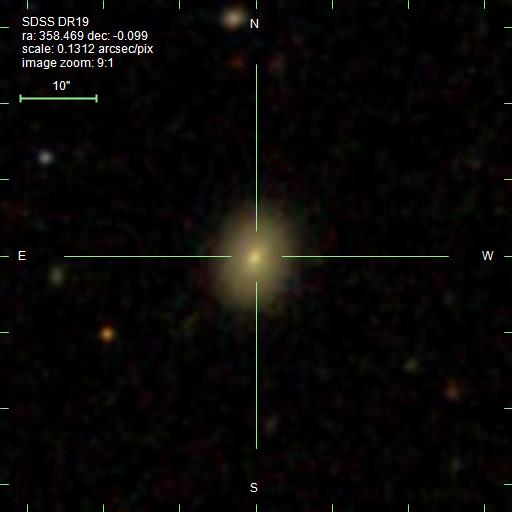
As of the date of posting I’ve run models for about 3/4 of the sample using my standard Stan model and the “medium” size SSP model library. I haven’t attempted any detailed analysis of results yet, but I do look at some graphs as model runs complete. I have noticed a few fairly consistent themes which I will illustrate with a single unremarkable galaxy from the cpsb sample, with plateifu 8655-1902 (mangaid 1-29809):

SDSS “finder chart” image of SDSS J235352.51-000555.3 — MaNGA plareifu 8655-1902 (mangaid 1-29809)

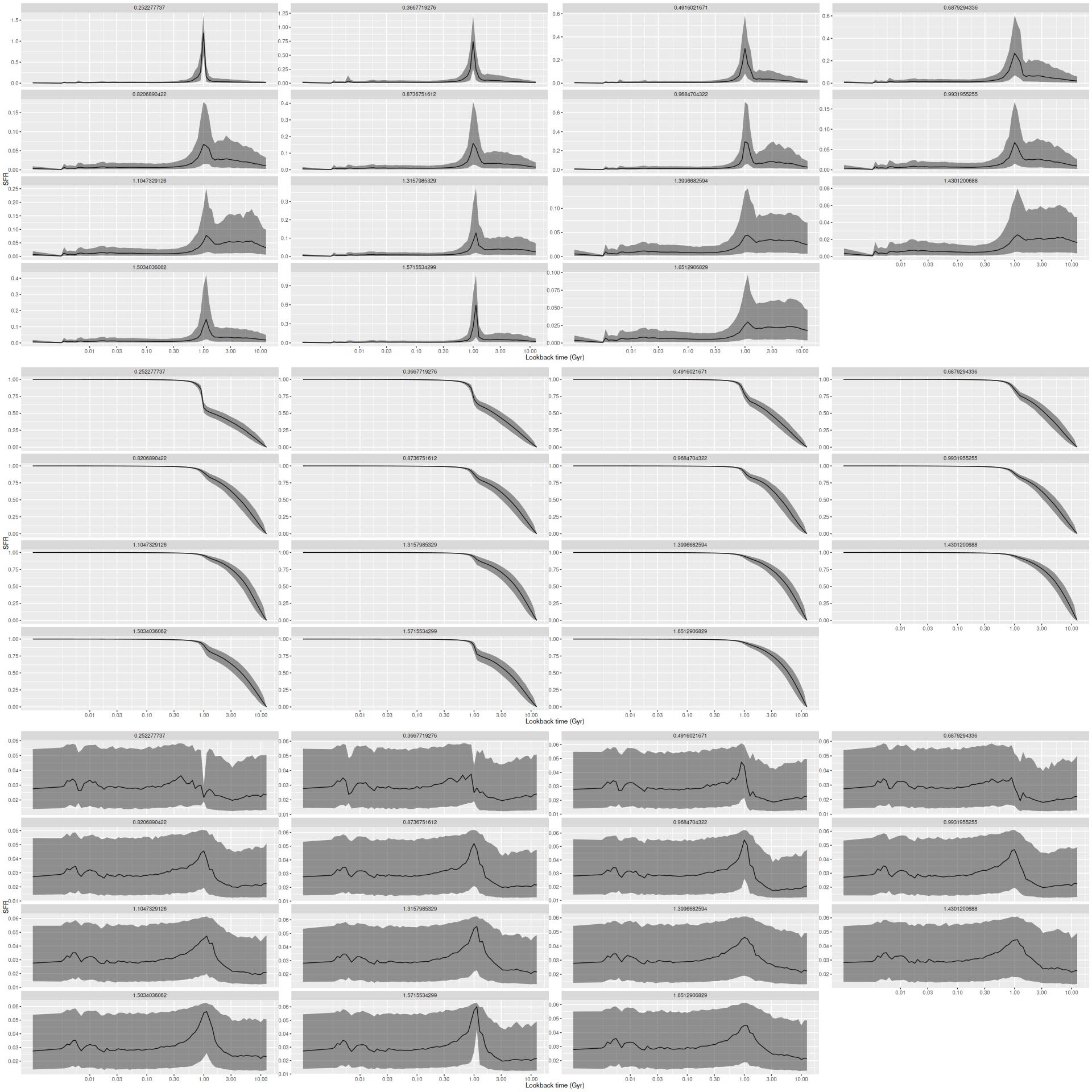
I’m trying to increase the minimum nominal signal to noise to average around 8 per pixel, although that isn’t always feasible. In this case the stacked RSS file binned to 15 spectra with a SNR range of 8.2-22.9. Here are the model star formation rate, mass growth, and metallicity histories for all 15 bins arranged by distance to the IFU center. The SFR scales are allowed to vary while the other two have fixed vertical scales. Lookback times are scaled logarithmically.

SDSS J235352.51-000555.3 — MaNGA plareifu 8655-1902 (mangaid 1-29809)

Modeled star formation histories, mass growth histories, stellar metallicity histories — binned spectra ordered by distance from center

One thing I’m noticing in the sample (both cpsbs and rpsbs) is a distinct tendency for bursts, where they appear in a model, to peak at right around 1 Gyr. Is there something in the sample selection criteria that favors a rather narrow range of burst ages, or is it some peculiarity of this SSP model library? It could be either. Taking the models literally this galaxy did indeed have a centrally concentrated but widespread burst, with some outer regions heving slightly enhanced star formation with quenching at about the same time as the center.

As the third set of graphs show the models don’t even “claim” to constrain stellar metallicity to any great degree. This version of the library has only 3 metallicity bins: Z = {0.011, 0.02, 0.063}, and the credible interval bands cover essentially the entire range of inputs. Somewhat surprisingly though there do appear to be systematic changes around the time of the burst. In this case the center shows a small decline in metallicity while most of the outer regions have a sharp increase that decays to a mean value a little larger than the pre–burst metallicity. I can’t quite make sense of this, but it does actually agee with Leung’s results.

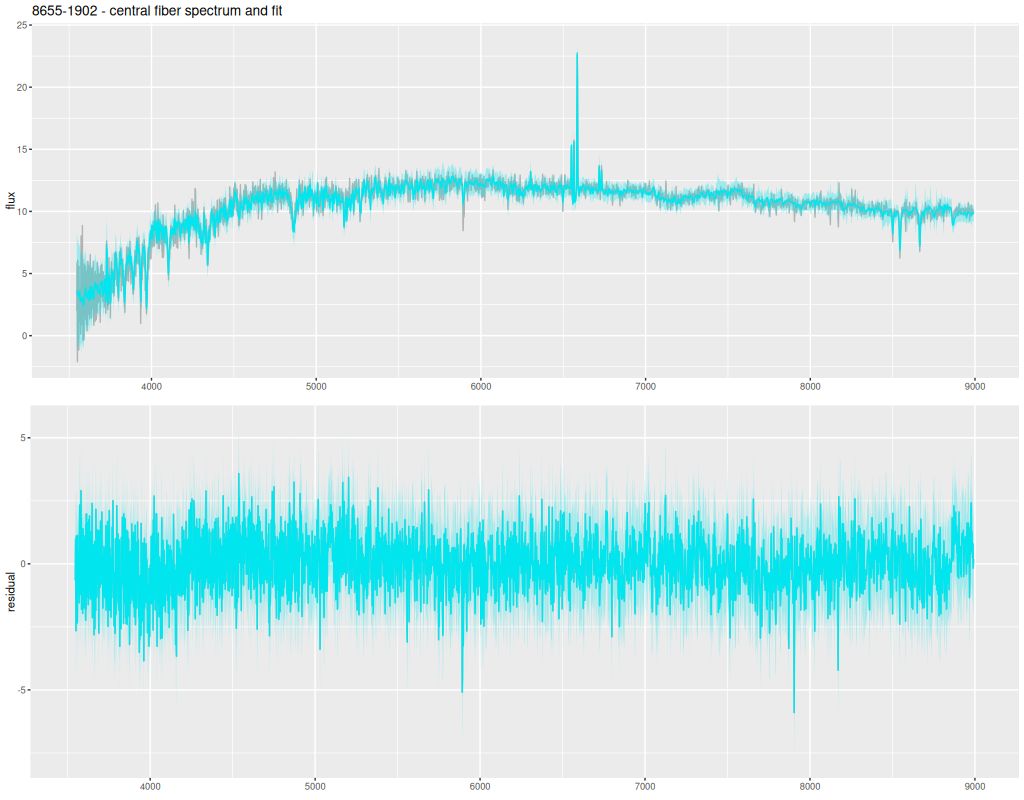
Here is the (posterior predictive) fit of the model to the central fiber spectrum:

MaNGA plateifu 8655-1902 (mangaid 1-29809) — central fiber spectrum, PP model fit, and residuals

There aren’t any long stretches with systematic departures from the observations, except for a slight upturn in the residuals at the reddest wavelengths. This seems to be relatively common: the continuum sometimes turns sharply upward at the reddest wavelengths — this gets flagged as a “blowtorch” in the MaNGA data reduction pipeline and along with night sky lines make the reddest 1000Å or so useless for analysis. I may decide to truncate the SSP model spectra at a slightly shorter wavelength, but for now I will continue the analysis with the current library version.

I will put off further analysis until I’ve finished model runs. Should be another week or two.

Brief simulations update, and some related literature

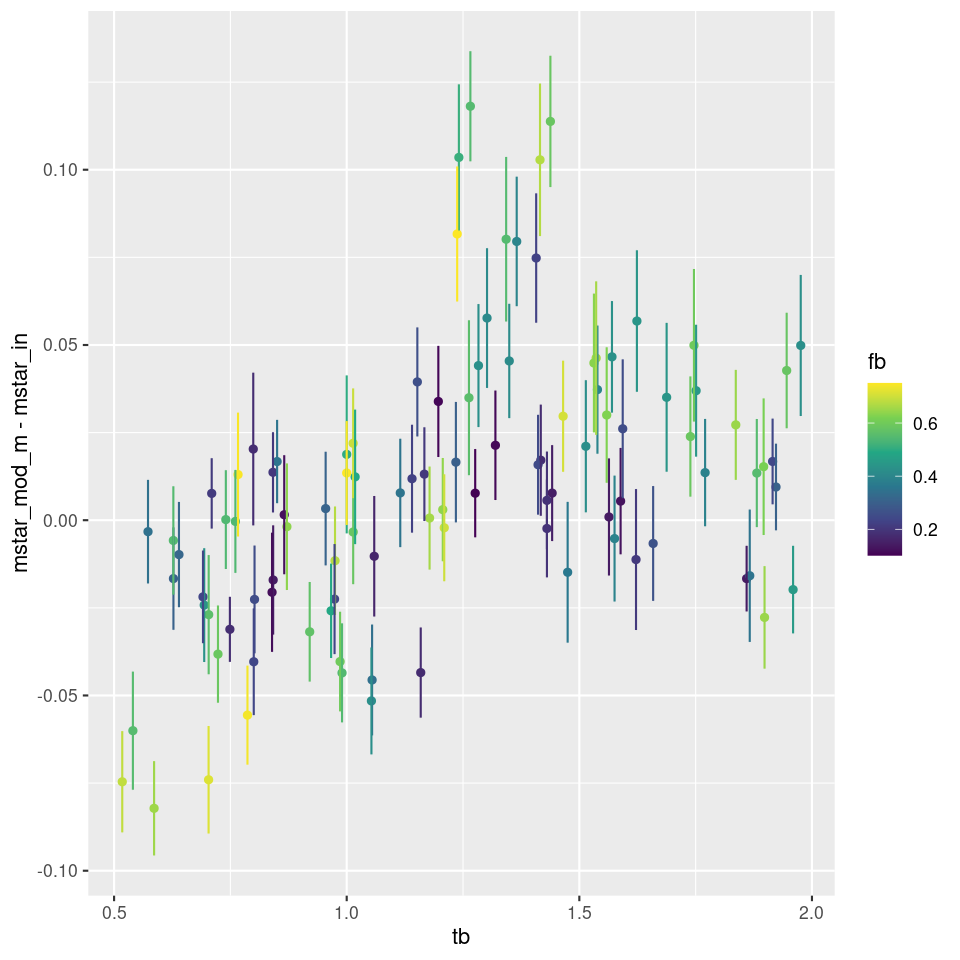
A few brief comments about the simulations, of which I’ve done a few more but will probably bring to an end. First, here is a plot I mentioned but didn’t display last time of the bias in stellar mass estimate against the lookback time to the burst. Points are color coded by burst strength.

Bias is stellar mass estimate vs. lookback time to burst (simulations)

There appears to be a weak trend with burst age up to about 1 Gyr, but at all burst ages and strengths there are biases on both sides of zero. It isn’t clear to me what, if anything else, is driving biases in either direction. The one thing I can say for sure is that the models are overconfident in their ability to estimate the stellar mass since the typical 1σ error bar is under 0.02 dex while the scatter is around ±0.1 dex. I actually think 25% uncertainty in stellar mass estimates is optimistic.

I remembered a short while ago that “outshining” is the term of art in the industry for the situation in which light from recent star formation overwhelms that of the older population. This seems to be a fairly major concern in the literature. A full text search of ADS found 722 instances of its use in the astronomical literature with an explosion of usage after 2006. A quick scan of titles suggests perhaps half of the papers are about SFH modeling. Of course the word is often used in other contexts.

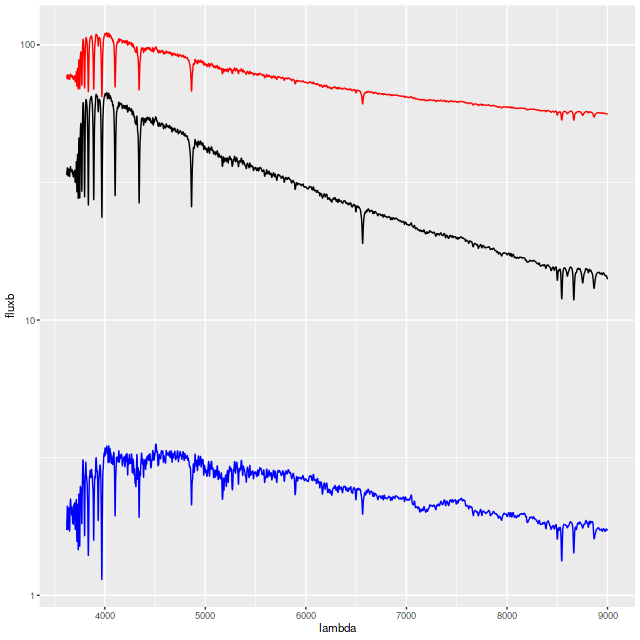
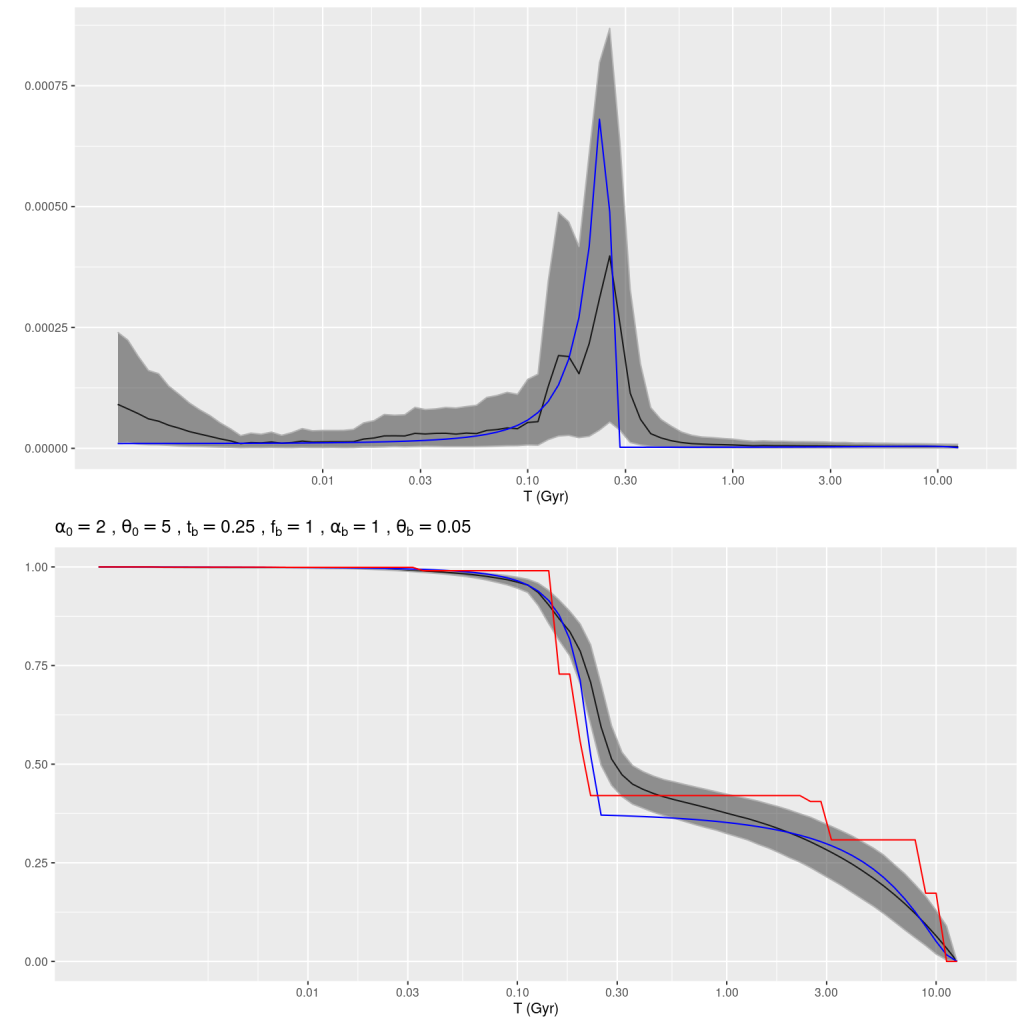
As a slightly more stringent test for outshining I ran one more simulation with a more recent and stronger starburst (tb=0.25 Gyr, fb = 1) than the earlier simulations. Even though the light of the burst population dominates the old base population the latter does have some effect of the combined spectrum (in red below, and offset vertically for clarity): it is redder and the line strengths are altered somewhat relative to the burst population.

Synthetic spectra – strong recent starburst. Fluxes are logarithmically scaled. Total flux (red) is vertically offset.

The model actually captures both the ancient and recent star formation history rather well. The mass growth marginal confidence band at old ages covers the input right up to the beginning of the burst build up, and the post-burst SFR is modeled accurately. The total mass in the model slightly exceeds the input: log(M*) = 4.88±0.02 model, 4.84 input. The model specific star formation rate is nearly identical: -9.33±0.08 model, -9.36 input.

Simulation – strong recent starburst

Shortly after starting these simulations I noticed a paper by Suess et al. (2022) describing simulations with a similar objective of testing the ability of a code named PROSPECTOR to recover star formation histories of post-starburst galaxies in the ideal case of inputs matched to the model, i.e. the inputs are used to generate the mock data and then to fit it. I’m not going to say a lot about either the code or paper. IIRC the first published description of the code (Leja et al. 2017) claimed it to be the first to model non-parametric star formation histories in a fully Bayesian framework. As far as I know this is true in the published literature but they only could use a few very broad time bins; the version used in Suess uses 9. I was already using the full time resolution of my adopted SSP model libraries by then.

The 2022 paper only shows a single, no doubt cherry picked example of a fit to mock data. Like mine their model star formation histories fail to cover the inputs for some age ranges. On the other hand their fits to a mock spectrum appear to be rather poor with large systematic errors. In every model run of mine residuals look very much like 0 mean Gaussian white noise with the expected deviance. They appear to show a similar range of deviations from input stellar masses with no significant error in the mean. Another striking similarity is they find a definite floor to late time star formation rates. As I’ve noted many times my models will always include some contribution from very young populations and there seems to be a floor around 10-11.5 /yr in specific star formation rate.

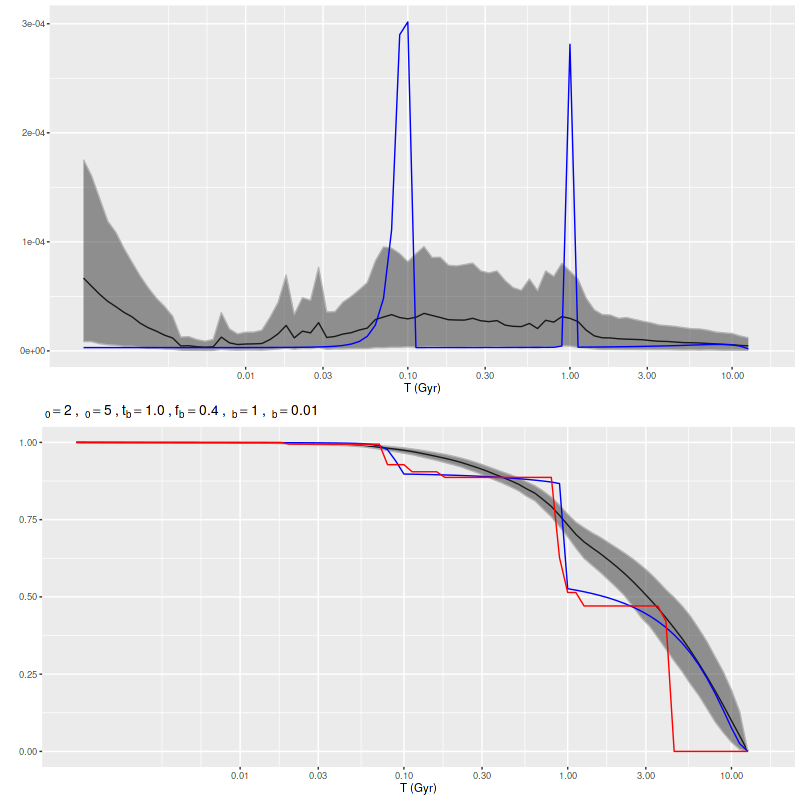
A much more recent paper by the same group (Wang et al. 2025) looked at simulated data from quite different systems, namely ones with bursty star formation on short time scales. Their work was motivated by yet more simulations of galaxy formation in the early universe. I’m again not going to comment much on this paper except to notice that they concluded that “given the correct SFH model, it is indeed possible to infer the SFH by performing SED fitting.” In other words they had to fine tune their prior to get to the right posterior. I’m sure it’s not as tautological as that sentence appears. Anyway, this motivated me to take a brief look at a few multiple burst simulations. The one shown below has two very sharply peaked ones with roughly the same peak SFR but more total mass in the older one. The model has spread out star formation over the entire interval between the input bursts with a slower rise and decay. Once again the maximum likelihood fit obtained with non-negative least squares captures the timing and relative magnitude of the bursts rather well.

Simulation – 2 short starbursts

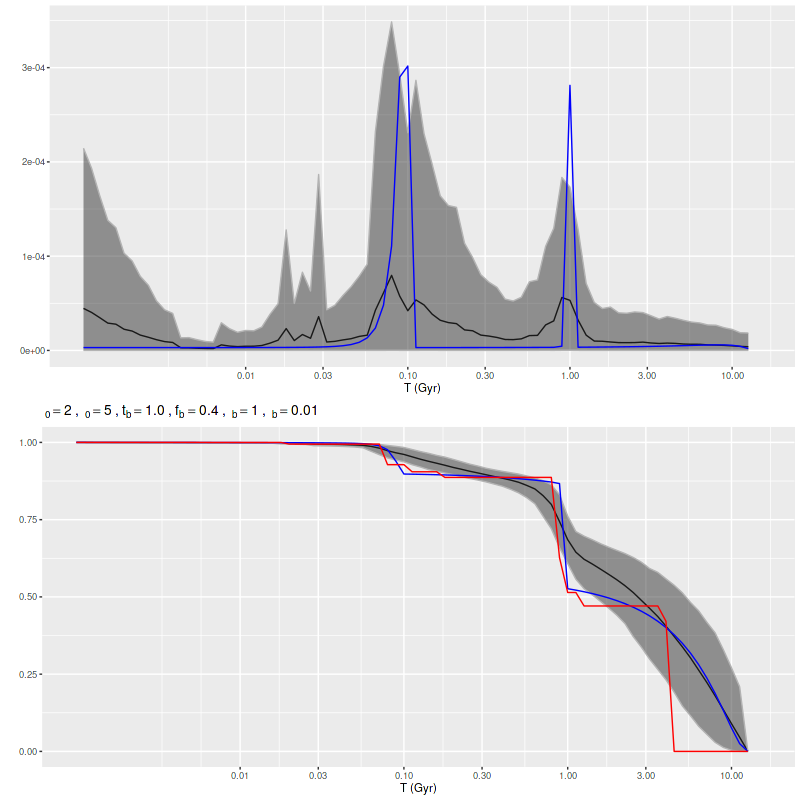
Recall that my stellar contribution estimates are parametrized as an N-simplex with an implicit Dirichlet prior with concentration parameter α = 1, which is uniform on the simplex. In principle adopting an explicit prior with a concentration parameter < 1 should encourage a more bursty star formation history without favoring any particular ages, and it did (this run used α = 0.25):

Simulation – 2 short starbursts, modified prior

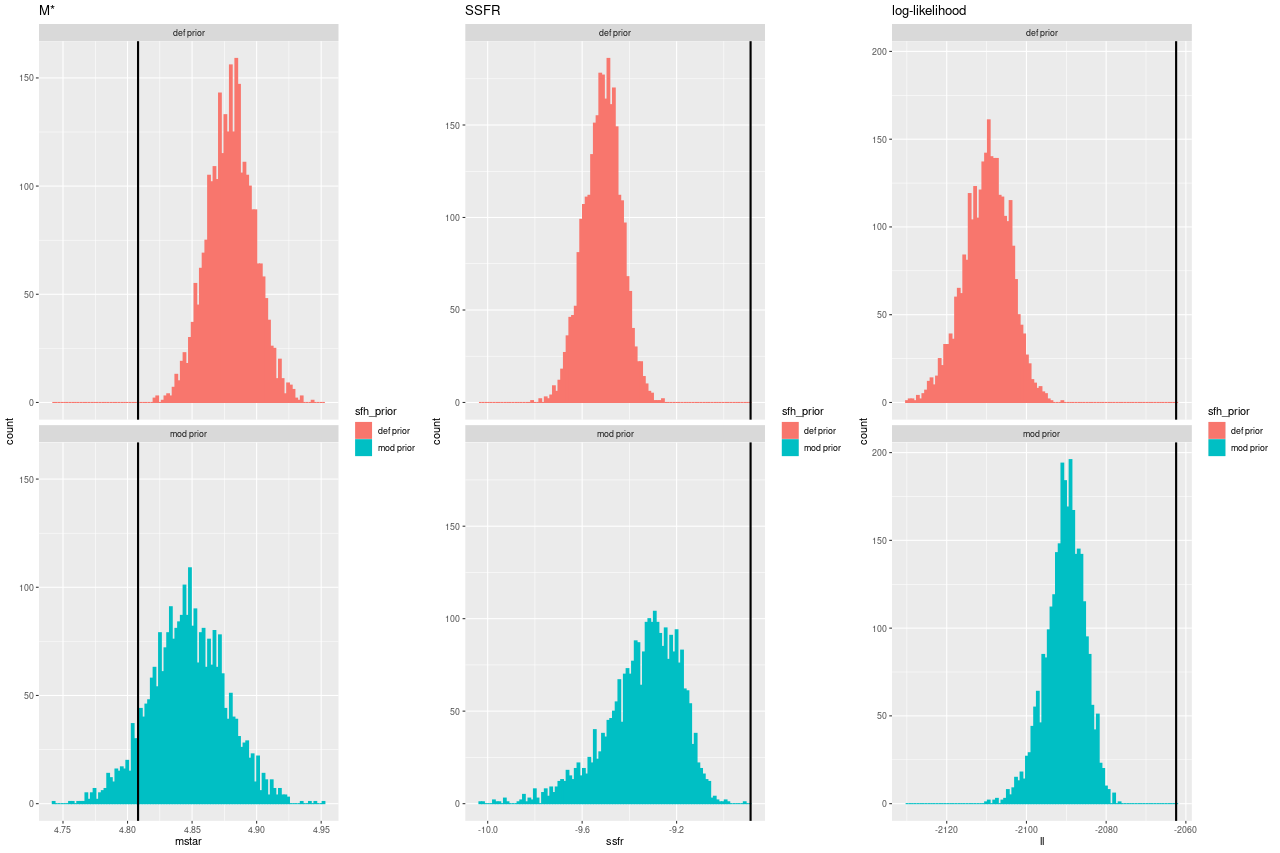
Here are histograms of a few summary quantities I track: the present day stellar mass, specific star formation rate (100 Myr average), and the summed log-likelihood of the fits to the spectra. Both runs underestimated the sSSFR because the recent burst was more spread out in the models.

Two burst simulation: comparing two priors on stellar contributions for sampled stellar mass, SSFR, and log-likelihood of fits

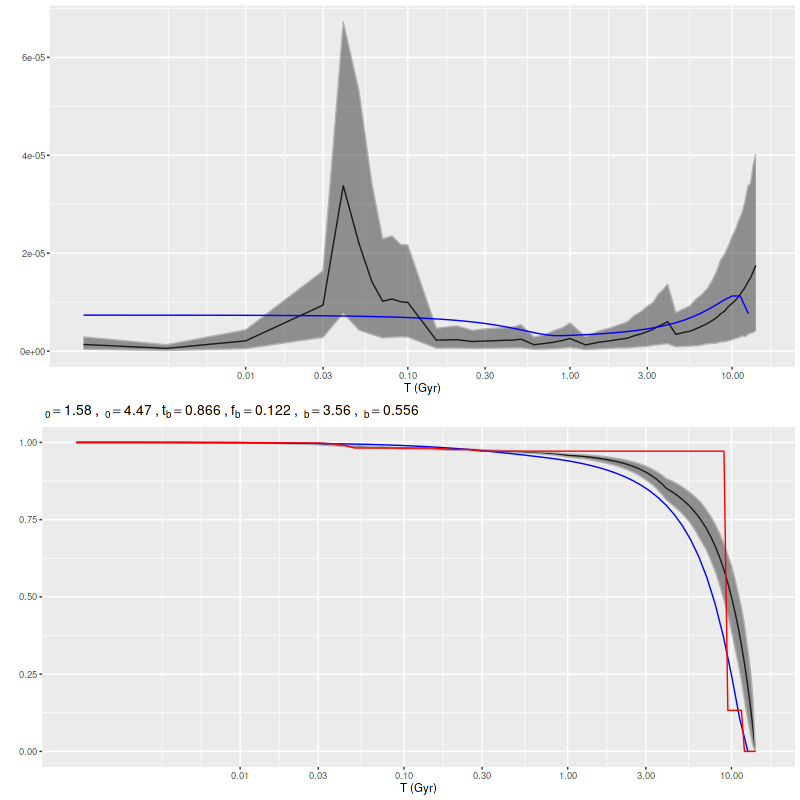
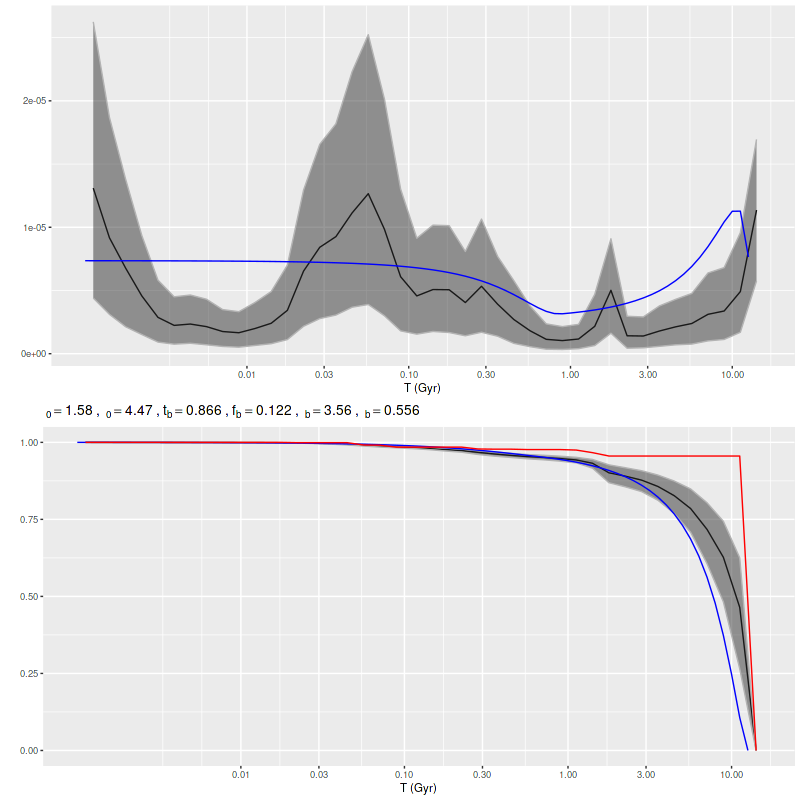
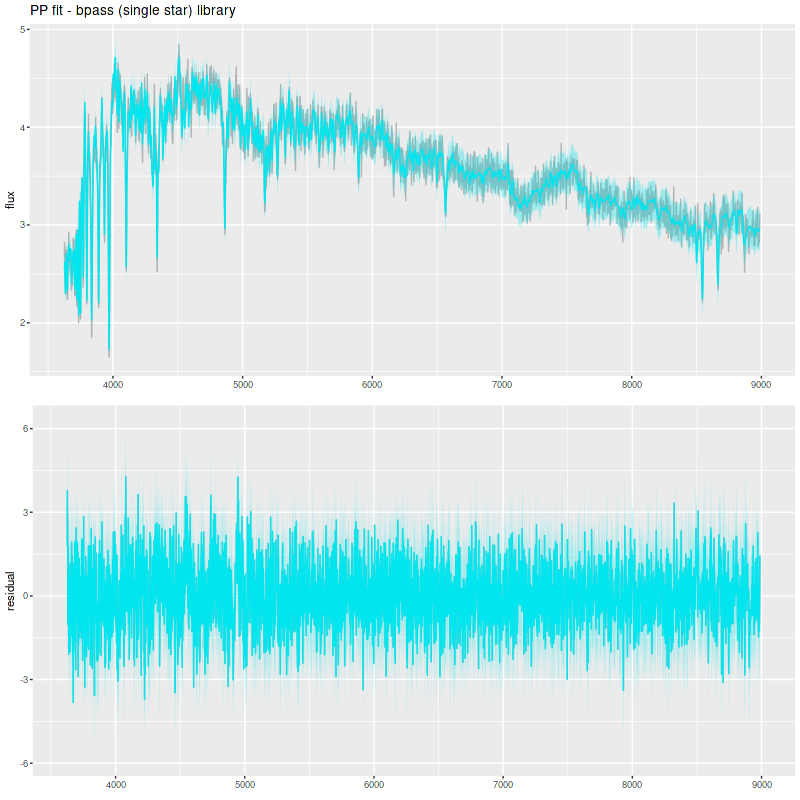
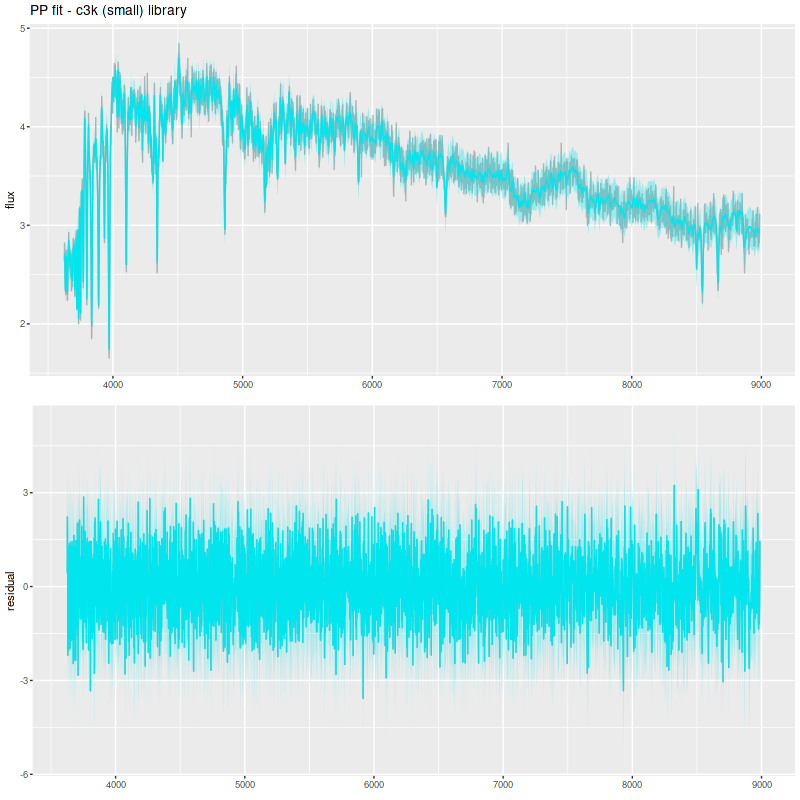
Finally, I did a few runs with two other libraries: EMILES, which has been my base SSP model library for some time, and BPASS with single star evolution and an upper mass limit of 100 M. The parameters I used for the star formation history resulted in a gentle late time revival rather than a burst. Both model runs had late time bursts, although the mass added was negligible. The EMILES run has the characteristic jumps at ages where the age intervals change. Although it’s small the BPASS run has the jump at 1.6 Gyr that I noted previously.

Simulation with C3K input and EMILES as test library

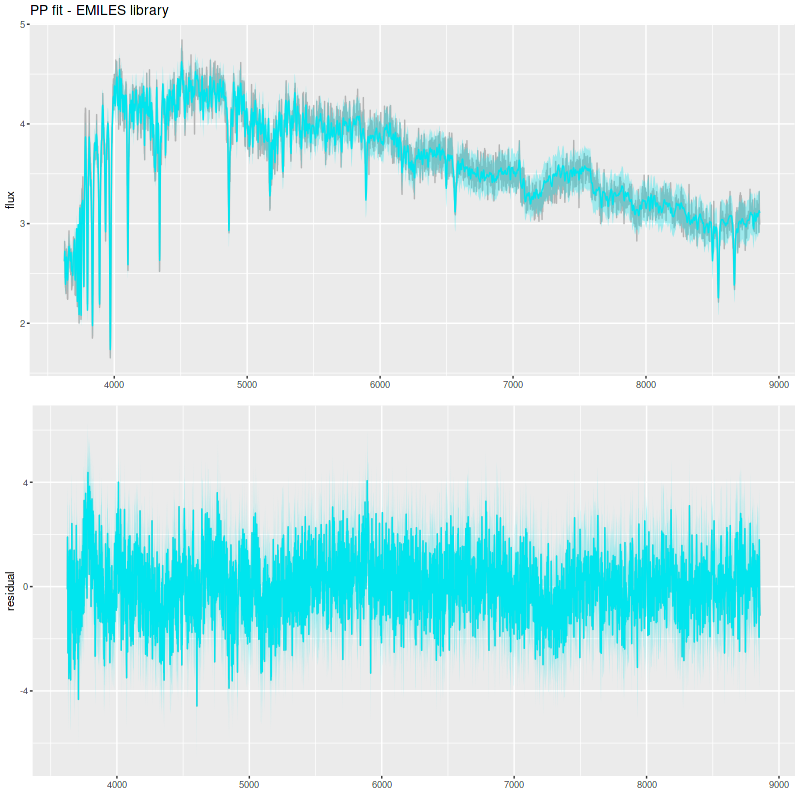
As with real data the EMILES models have some systematic errors around the trough around 7000-7300Å, and also in the blue near the Balmer break.

The BPASS models fit the data surprisingly well, despite using completely different sources for stellar atmospheres.

Comparison PP fit with C3K as test library:

The table below summarizes a couple of the quantities I track. The Progeny C3K models that were used to create the inputs recovers them flawlessly. The other two recover the mass (BPASS is low by more than its nominal uncertainty), but are biased on the high side in late time star formation rate estimates.

Stellar masssSFR
input4.78-9.91
Progeny C3K4.78 (0.017)-9.90 (0.054)
EMILES4.82 (0.012)-9.62 (0.028)
BPASS4.67 (0.03)-9.73 (0.049)

I’m going to get back to real data now using the Progeny generated libraries. The simulations were a useful exercise if for no other reason than to show that timing faded starbursts can’t be done very accurately, at least with full spectrum fitting at visual wavelengths. I did get some ideas for small code improvements, and the idea of stacking star formation rate and mass growth histories seems like a useful visualization tool.