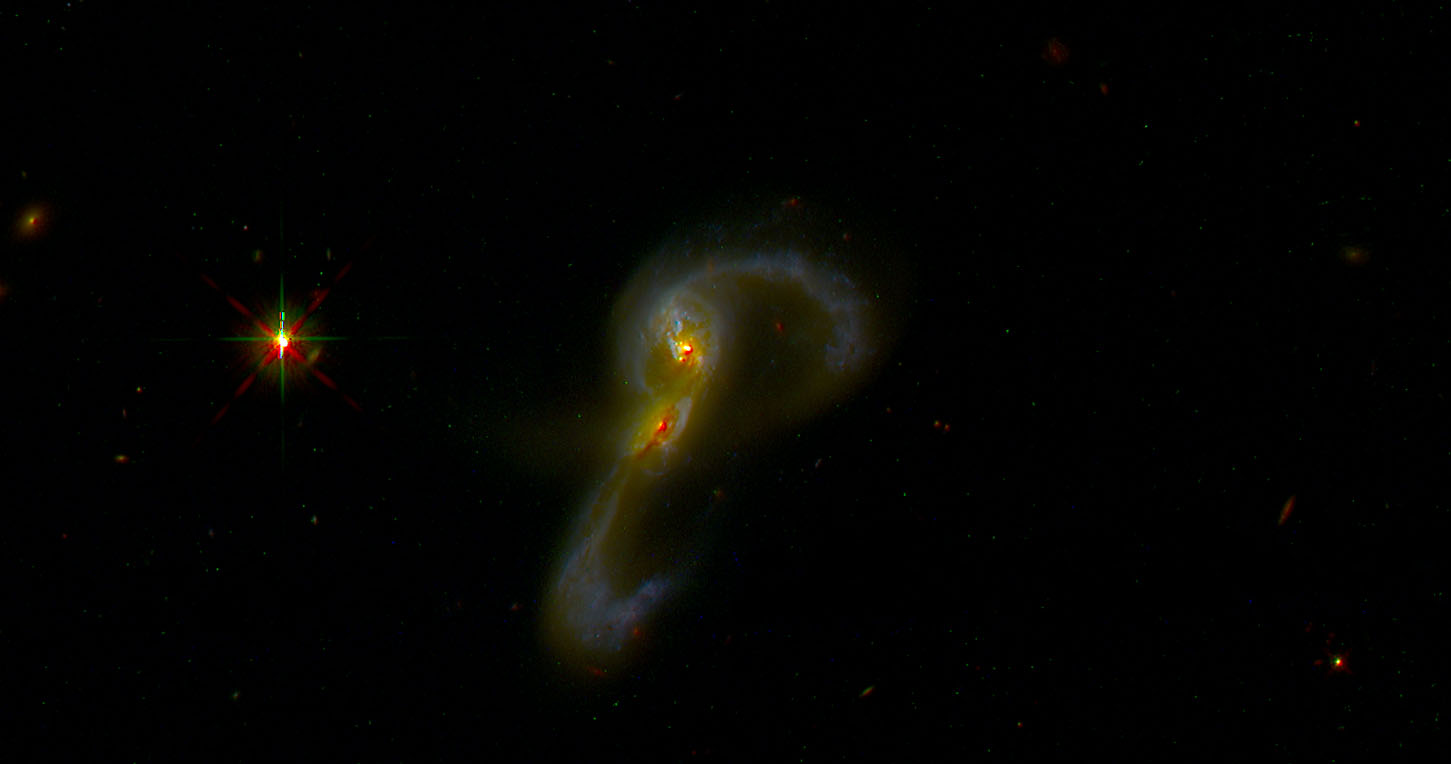
UGC 10200 and MCG +07-33-040

The Hubble Space Telescope “gap filler” program “Gems of the Galaxy Zoos” (proposal ID 15445, PI William Keel) had several prospective targets that I played a small role in selecting, and this recent HST observation was one of them. The actual target was the small disturbed galaxy at top left, which I will refer to as MCG +07-33-040. I don’t know if it was fortuitous that the larger and brighter UGC 10200 was also imaged in the same ACS field, but these are clearly interacting or at least have in the recent past, as is the small system in the upper right, which is identified as a blue compact galaxy with redshift z=0.00556 in Pustilnik et al. (1999). I’m going to focus on the top left galaxy in this post.
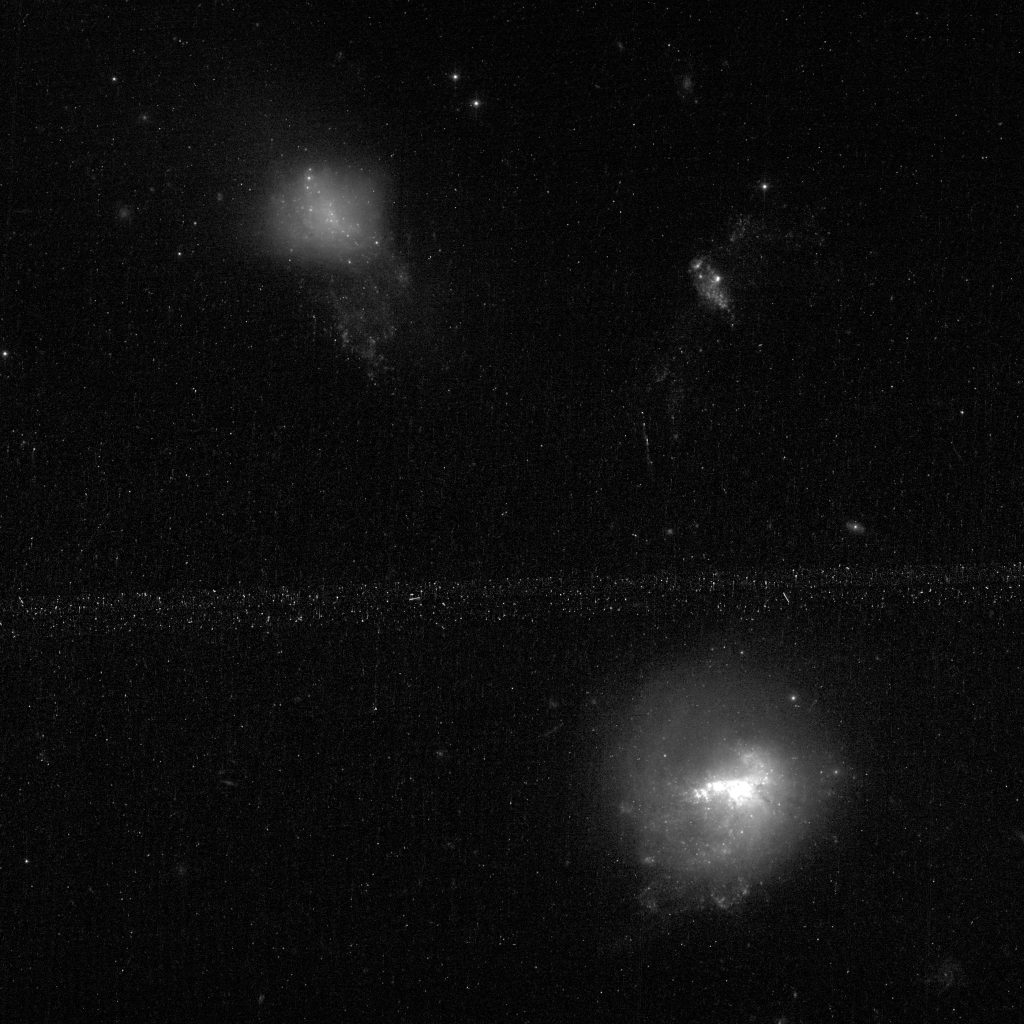
Galaxies UGC 10200 (lower right) and MCG +07-33-040 (upper left). HST/ACS, F475W filter. Proposal ID 15445, PI Keel.

What interested me wasn’t the galaxy image so much as its SDSS spectrum, which has three interesting characteristics:

SDSS spectrum of central part of MCG +07-33-040

First, this is a classic post starburst galaxy spectrum with extremely strong Balmer absorption lines1My code measures the Lick index HδA as an exceptionally strong 8.06 ± 0.41 Å. and no obvious evidence of emission. In fact, although this designation isn’t used much anymore, it’s actually a classic “A+K” spectrum which reverses the usual “K+A” terminology to indicate the light is dominated by early type (i.e. young) stars. Second and third, the spectrum was misclassified as coming from a white dwarf star, and the redshift was erroneously estimated as around 0.004 which was the maximum allowed for stars in the SDSS data reduction pipeline. Using a variation of the code that I use to measure redshift offsets I get a robust value of z = 0.006682 ± 9E-06
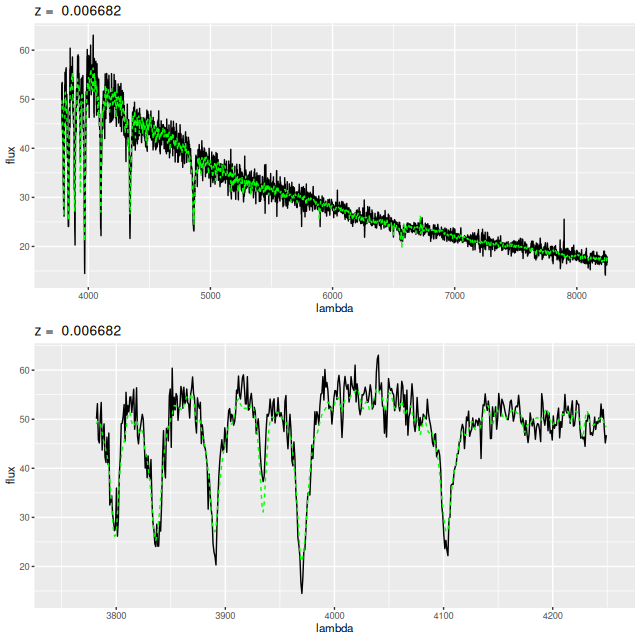
Template fit to SDSS spectrum of MCG +07-33-040

This is almost exactly the same redshift as its nearby companion UGC 10200 (also in the HST image above), which has a securely determined z = 0.00664

SDSS spectrum of central region of UGC 10200

For the rest of this post I’m going to assume the Hubble flow redshift is the measured one, which with my adopted cosmological parameters2which for the record are H0 = 70 km/sec/Mpc, Ωm = 0.27, Ωλ = 0.73. make the luminosity distance 28.8 Mpc, the distance modulus m-M = 32.3 mag, and the angular scale 138 pc/” or about 7 pc per ACS pixel. The projected distance between the centers of the two bright galaxies in the HST image is about 96″ or 13.2 kpc.

I spent some time last weekend downloading and starting to learn the software Aperture Photometry Tool (APT), which is interactive software for manually performing aperture photometry. Zooming in on the center of the presumed post starburst galaxy I located the reported position of the SDSS fiber as closely as I could. In the screenshot below the aperture radius was set to 30 pixels, the same size as the SDSS spectroscopic fibers. I measured the F475W AB magnitude to be 17.90 ± 0.013 without sky subtraction, which is close enough to the SDSS g band fiberMag estimate of 18.05. The SDSS g band Petrosian magnitude estimate is 15.16, so the fiber contains about 7% of the total galaxy light.
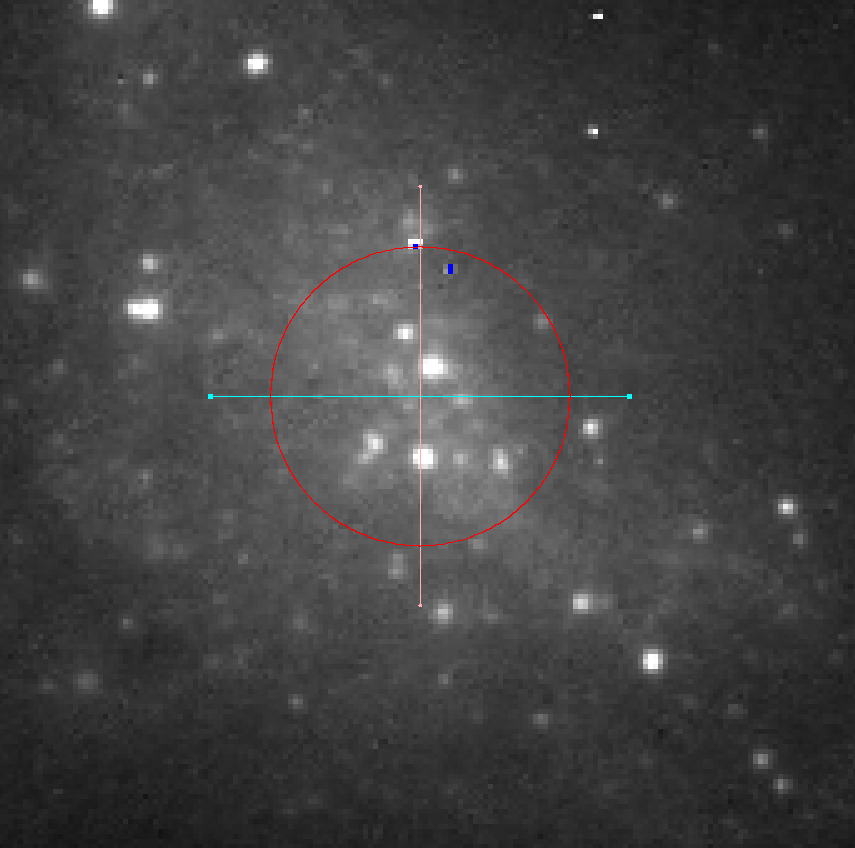
Central region of MCG +07-33-040 with position and size of SDSS fiber overlaid. Screenshot from APT

A striking feature of the HST image is there are many point-like symmetrical objects embedded within the otherwise nearly featureless diffuse light of the galaxy. Within the SDSS fiber footprint I count about 8-10 of these (the range being due to some uncertainty about what to call point-like and symmetrical). In order to get a handle on their contribution to the spectrum I did aperture photometry on them using a 3 pixel radius aperture with median sky subtraction from a 5 to 8 pixel radius annulus. The apparent magnitudes of the 5 brightest objects range from about 22.6 to 23.1. The summed luminosity of those 5 amounts to only 3.5% of the total light in the fiber, so the spectrum is mostly telling us something about the diffuse starlight. Even if one or more of those objects are foreground stars they can’t be a significant source of contamination. Clicking around the blank regions of the HST field I found fewer than one star per SDSS fiber size region, so it’s likely there are few if any foreground stars within the visible extent of the galaxy.

There is plenty of observational and theoretical evidence that massive star clusters are formed in mergers and close encounters of galaxies. As a coincidental example the merger remnant NGC 3921 — which was one of the 4 galaxies in my last post — has over 100 young globular clusters located both in the main body and southern tidal tail (Schweizer et al. 1996; Knierman et al. 2003). The brightest source in this galaxy (near the southern edge of the visible fuzz) has an apparent magnitude of m ≈ +21.7, which for the adopted distance modulus is M ≈ -10.6. With a solar g band absolute magnitude of 5.11 this corresponds to L ≈ 1.9×10⁶ L . The 5 brightest objects within the fiber have absolute magnitudes between about -9.7 and -9.2. These would be quite luminous for galactic globular clusters, but they’re likely to be fairly young and would fade by at least a few magnitudes as they age.

I haven’t tried a more sophisticated analysis of these objects’ sizes, but using the APT radial profile tool the presumed clusters look little different from nearby foreground stars and all that I’ve examined have FWHM diameters around 2-2.5 pixels. A strict upper limit to their sizes is therefore around 14 pc.

Someday I may undertake a complete census and luminosity function of the cluster system in this galaxy, and perhaps also look at the neighboring starburst galaxy UGC 10200. These systems by the way are cataloged as an interacting dwarf galaxy pair by Paudel et al. (2018) with a total stellar mass of log(M*) = 9.5 and a 3:1 mass ratio, which makes the estimated stellar mass of this galaxy just under 109 M. The system is very gas rich, with a neutral hydrogen mass estimated (by the same source) of 109.69 M. There are actually at least two published HI maps of this system. The one below, from Thomas et al. (2004) shows that atomic hydrogen extends over essentially the entire extent of the Hubble image above, including the target galaxy.
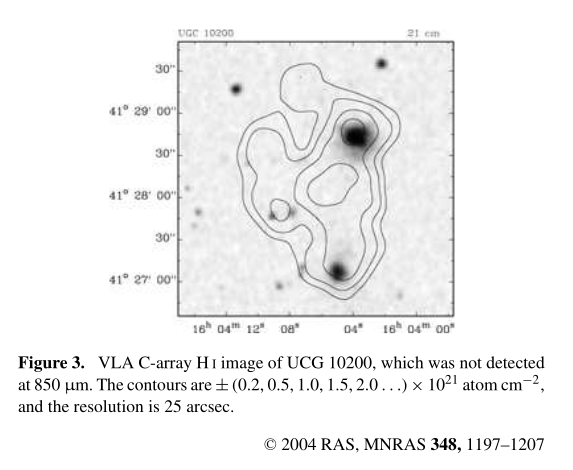
VLA map of HI gas in UGC 10200 system

Next I turn to star formation history models for the post starburst spectrum at the top of the post. This uses the same Stan model code as my MaNGA investigations with some minor pre- and post-processing adjustments. I ran two separate models. One used a metal poor subset of the EMILES SSP libraries with Z ∈ {[-2.27], [-1.26], [-0.25]} with, as usual, Kroupa IMF and BaSTI isochrones. I did not attempt to append younger models, so the youngest age is 30Myr. For completeness I also ran a model with my usual EMILES subset + PYPOPSTAR models and Z ∈ {[-0.66], [-0.25], [+0.06], [+0.40]}. First, here is the modeled star formation history with the metal poor subset. I’ve again used a logarithmic time scale and linear star formation rate scale.
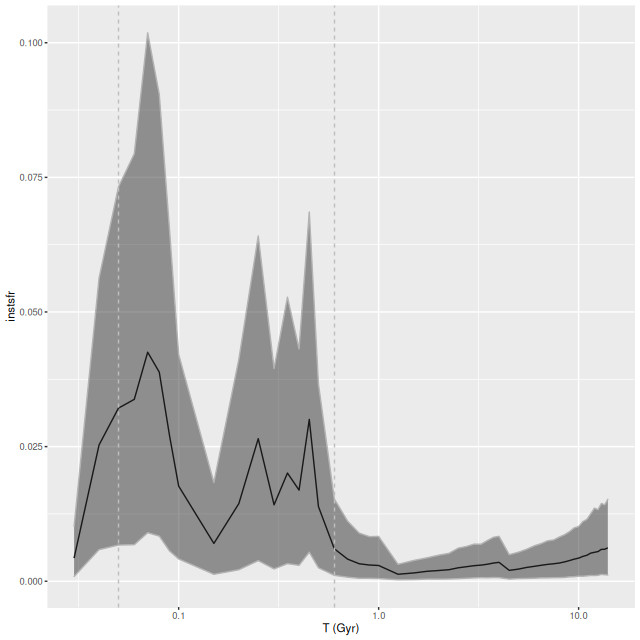
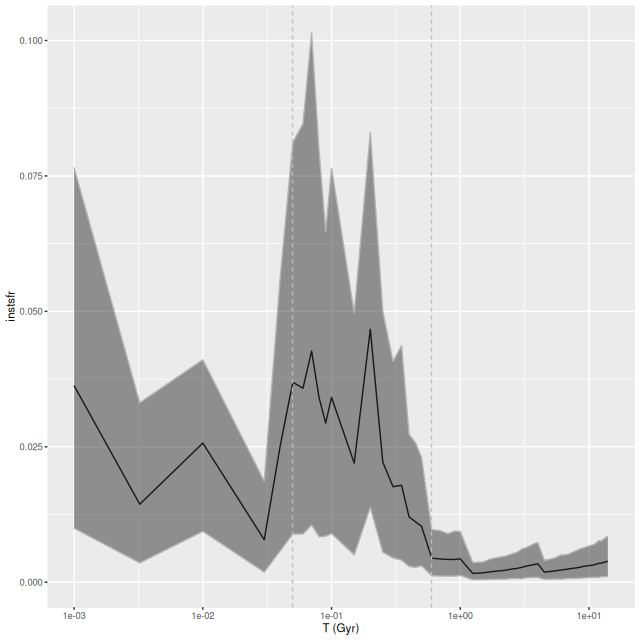
Model star formation history of central region of MCG +07-33-040 using metal poor subset of EMILES SSP library

Next is the metal rich subset:

Model star formation history of central region of MCG +07-33-040 using metal rich subset of EMILES+pypopstar SSP library

Both model runs show a fairly steep ramp up in star formation beginning at about 600Myr lookback time and a steep decline around 50Myr ago. The lingering star formation in the metal rich model might be a manifestation of the infamous “age metallicity degeneracy” since Balmer Hα emission is too low to support this level of star formation. Comparing the mass growth histories exposes a more subtle effect: the metal poor models have a consistently higher mass fraction at any given epoch. Also, the period of accelerated star formation involved a slightly smaller fraction of the present day stellar mass.

Mass growth histories of MCG +07-33-040 using metal poor and metal rich subsets of EMILES SSP library

Both models fit the data well. In terms of mean log-likelihood the metal poor model outperformed the metal rich, but only by about 0.4%. The proper Bayesian way to compare models is through the “evidence,” which is hard to estimate accurately. I suspect the metal poor model would be at least slightly flavored because it has fewer parameters than the metal rich one.
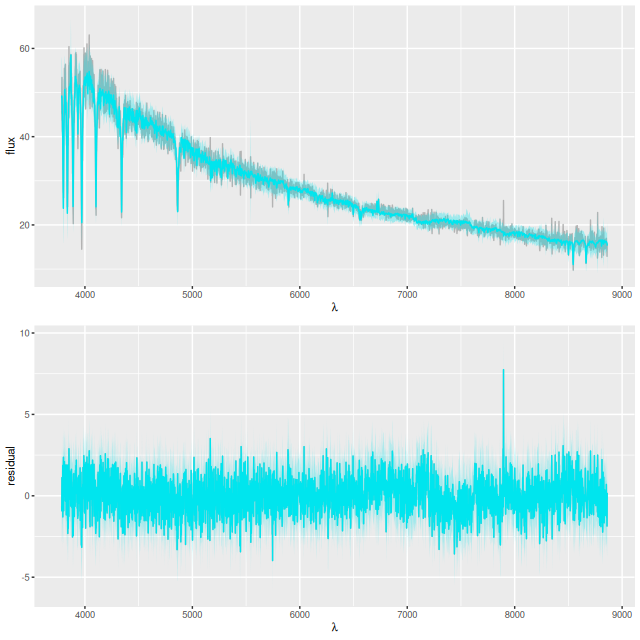
Posterior predictive fit to SDSS spectrum of MCG +07-33-040

The duration of accelerated star formation (about which both models agree) is a little surprising in light of simulations that usually show a fairly short SF burst in the first passage in mergers. But, simulations have only explored a small range of the potential parameter range. Studies of low mass galaxies with extended, massive HI haloes might be of interest.

One more sanity check. Suppose the closest approach between our target and UGC 10200 was 60Myr ago, allowing another 10Myr before (presumably) supernova feedback quenched star formation. Assuming the relative motion is transverse to our line of sight traveling 13.2 kpc in 60Myr implies an average separation speed of ≈215 km/sec. This is a perfectly reasonable value for a galaxy pair or loose group.

Finally for this spectrum, here is a quick look at emission line fluxes. Even though visually not at all obvious several lines were detected at marginal (>2σ) to high (>5σ) confidence. A couple of surprises are the [O I] 6300Å line, which is often only marginally detected even in star forming systems, is a firm (3σ) detection and stronger than the usually more prominent [O III] doublet. Also, the [S II] 6717-6730 doublet is a firm detection while the [N II] doublet is not. What this means is unclear to me. Most of the “strong emission line” metallicity indicators that I have formulae for include [N II] (or [O II] which are out of the wavelength range of these spectra), so it isn’t really possible to make a gas metallicity estimate. It’s a safe guess it’s subsolar though.

line[Ne III] 3869[Ne III] 3970[O III] 4959[O III] 5007[O I] 6300[O I] 6363[N II] 6548[N II] 6584[S II] 6717[SII] 6730
mean17.12.31.51.61.92.17.92.44.98.22.82.939.12.514.414.2
s.d.6.32.01.41.41.61.83.12.02.92.81.92.02.61.82.82.8
ratio2.71.11.11.11.21.22.61.21.73.01.51.515.21.45.25.2
Flux measurements for tracked emission lines in spectrum of MCG +07-33-040. Units are 10-17 erg/sec/cm2

There are at least two questions about this galaxy that it would be nice to have answers for. First, since the SDSS fiber only includes about 7% of the luminosity and a similar fraction of the stellar mass we really don’t know if it is recently quenched globally or just where SDSS happened to target. My guess from this HST image is that it is globally quenched because its companion UGC 10200 shows clear evidence of dust lanes and extended star forming regions even in this monochromatic image, while the diffuse light in this galaxy looks relatively featureless. A definitive answer would require IFU spectroscopy though.

A second question is whether the star cluster system is truly young or primordial (or both). This would require color measurements from a return visit by HST using at least one more filter in the red. Estimating a luminosity function is feasible with the existing data, although it would have rather shallow coverage. From my casual clicking around the image it appears to be possible to reach magnitudes a little larger than +24 with reasonable precision.

When this topic first came up on the old Galaxy Zoo talk I thought these might comprise a new and overlooked category of galaxies. In fact though all of the examples I investigated belonged to cataloged galaxies and most of the spectra were of small regions in much larger nearby galaxies. A few galaxies that were in the original Virgo Cluster Catalog and excluded from the EVCC because of lack of redshift confirmation should be added back. There were probably only a few like this one with large errors in redshift estimates and high signal to noise spectra. I haven’t spent enough time with the literature to know if rapidly quenched dwarf galaxies are especially interesting. Maybe they are.
Journal notes: Haines et al. (2015), “Testing the modern merger hypothesis…”

While browsing through the ADS listing of papers that cite Schawinski’s paper that I’ve been discussing for a while I came across this one by Haines et al. with the full title “Testing the modern merger hypothesis via the assembly of massive blue elliptical galaxies in the local Universe”. Besides being on the same theme of searching for post-starburst or “transitional” galaxies in the local universe that I’ve been pursuing for some time the paper was interesting because it made use of IFU based spectroscopic data that predates MaNGA. As it happens 4 of the 12 galaxies have observations in the final MaNGA release, providing an excellent opportunity to compare results from completely independent data sets.

The “modern merger hypothesis” that the authors tested relates to a topic I’ve discussed before, which is that N-body simulations show that strong, centrally concentrated starbursts are a possible outcome of major gas rich galaxy mergers around the time of coalescence. If some feedback process (an AGN or supernovae) rapidly quenches star formation there will ensue a period of time when the galaxy will be recognizable as post-starburst.

In a series of long and rather difficult (and influential judging by the number of citations) Hopkins and collaborators (2006, 2008a, 2008b) have made a case that major gas rich mergers with accompanying starbursts are in fact the major pathway to the formation of modern elliptical galaxies. They claim that their merger hypothesis accounts for a variety of phenomena, including the growth and evolution of supermassive black holes and quasars.

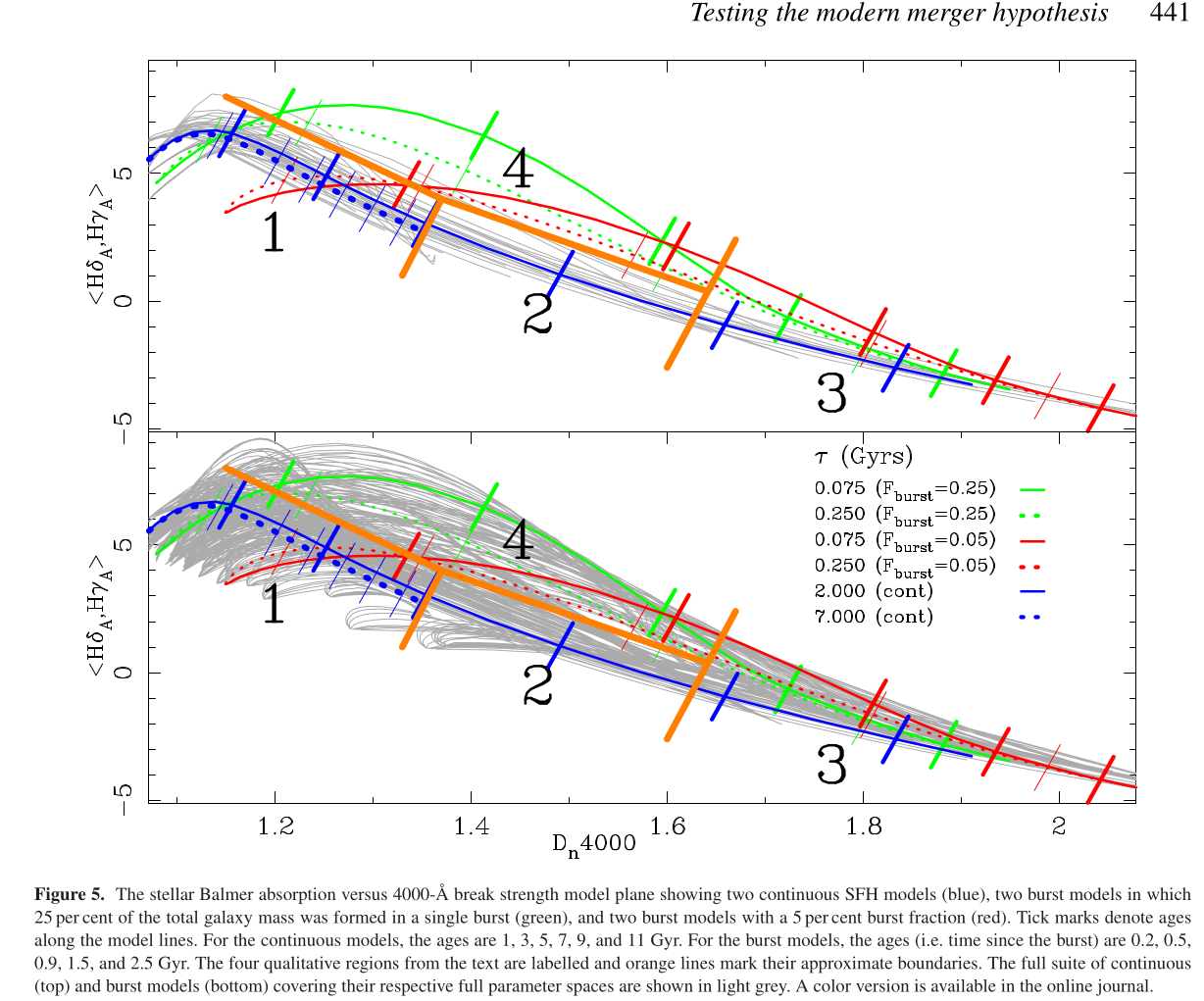
The specific aspect of the merger hypothesis this study tried to address was the prevalence of strong centrally concentrated starbursts in a sample of ellipticals in the process of forming as evidenced by visible disturbances consistent with recent mergers. The main tool they used was a suite of simple star formation history models with exponentially decaying star formation rate with single (also exponentially decaying) bursts on top of varying ages and decay time scales. They used these to predict just two quantities: Balmer absorption line strength measured by the average of the Lick HδA and HγA indexes, and the 4000Å break strength index Dn4000. For reference here is a screen grab of their model trajectories:

Predected trajectories in the Hδ – Dn4000 plane per Haines et al. (2015). Clipped from the electronic journal paper.

This is a pretty standard calculation variations of which have been performed for decades, and this graph looks much like others I have seen in the literature. A fairly basic problem with it though is that position in the Balmer – D4000 plane doesn’t uniquely constrain even the recent stellar evolution. In astronomers’ parlance there is a “degeneracy”1the term refers to a situation in which multiple combinations of some parameters of interest produce effectively equivalent values of some observable(s), or of course the converse. The best known example is the “age-metallicity degeneracy,” which refers to the fact that an old metal poor population looks like a younger metal rich one in several respects such as broad band colors. between burst strength (if any) and burst age. This is a well known problem with the Balmer line strength index that was already recognized by Worthey and Ottaviani (1997), who developed these indexes. Adding a second index in the form of the 4000Å break strength doesn’t break the degeneracy: there are regions of the plane where bursting and non-bursting populations overlap, as can be seen clearly in the graphic above. This is actually a problem for any attempt to identify post-starburst galaxies. After correcting for emission most ordinary starforming galaxies have strong Balmer absorption lines, so using that index alone will certainly produce many false positives. On the other hand selection criteria like those used by Goto and many others before and after — selecting for both strong Balmer absorption and weak emission — will capture only a small interval in post-starburst galaxies’ life cycles.

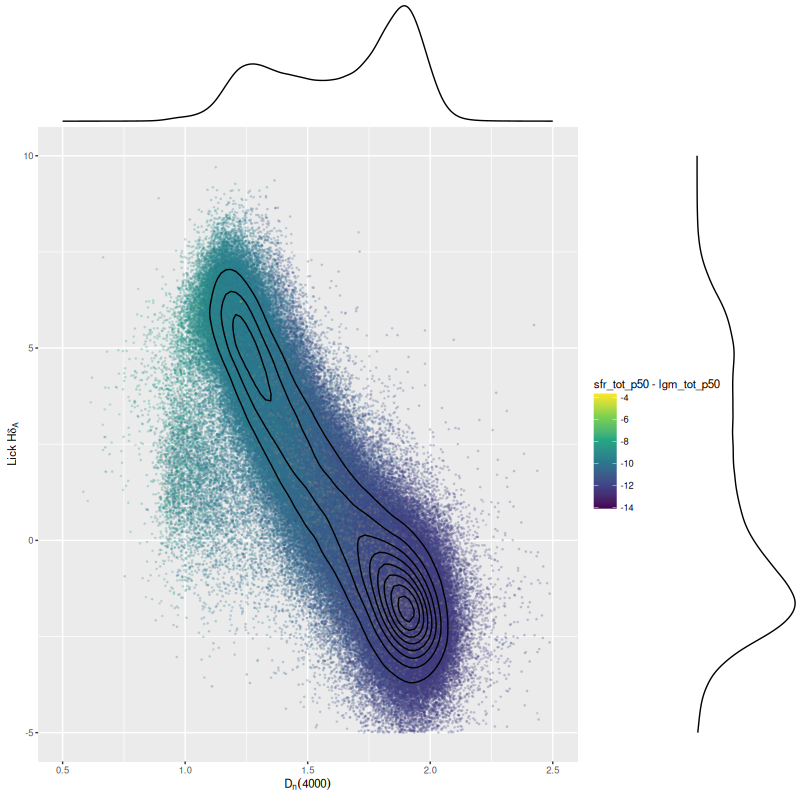
hd_d4000_bigsample
Hδ line strength vs. 4000Å break index for a large (~380K) sample of SDSS galaxy spectra. Measurements from the MPA-JHU analysis pipeline downloaded from SDSS Skyserver

Let’s get to results. Some basic details of the sample are in the table below. Morphological classifications are from McIntosh et al. (2014) as given in this paper. The abbreviations are SPM: spherical post merger; pE: peculiar Elliptical. The two marked pE/SPM didn’t have a strong consensus among several professional classifiers. I list them in order of my own visual impression of degree of disturbance. I also list redshifts taken from the MaNGA catalog and Petrosian colors.

NED nameNYU IDmangaidplateifuMorphzu-rg-i
NGC 39215410441-61744510510-6103SPM0.0191.970.86
MRK 3857194861-6049708940-6102pE/SPM0.0281.430.63
MRK 3661009171-6033097993-1902pE/SPM0.0271.590.79
NGC 1149223181-371558154-6103pE0.0292.291.11
Columns: (1) Common catalog designation (NED name). (2) NYU VAC ID. (3) MaNGA mangaid. (4) MaNGA plateifu. (5) Morphology (see text). (6) redshift from MaNGA DRP catalog. (7-8) Petrosian u-r and g-i colors from NYU VAC via the MaNGA DRP catalog.

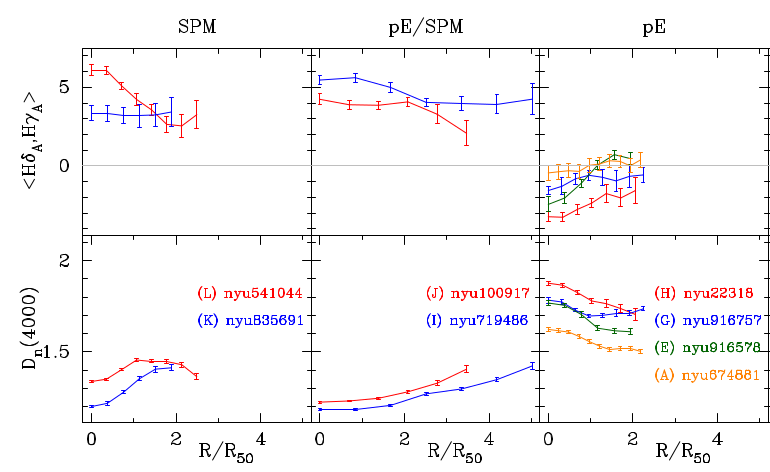
The main prediction of the merger with accompanying centrally concentrated starburst hypothesis the paper tests is that the Balmer absorption index should be large and have a negative gradient with radius while the 4000Å break strength should be low with a positive gradient. The authors concluded that only one member of their sample — nyu541044 — clearly falls in the post-starburst region (marked as region 4 in the graph above) of the <Hδ, Hγ> – Dn4000 plane. The two pE/PM galaxies, both of which are in my sample, lie in the starforming region 1. They inferred from this that these galaxies are undergoing at most a weak burst. I’m going to mildly disagree with that conclusion.

Screenshot from 2022-07-07 15-23-36
Measured values for the specified indexes from Haines et al. (2015). Clipped from the electronic journal paper.

I have calculated the pseudo Lick index HδA and Dn4000 as part of my analysis “pipeline” since I started this hobby. I actually make these measurements in the initial maximum likelihood fitting step since they don’t depend on modeling except for small (usually) emission corrections. I don’t calculate an Hγ index, but its theoretical behavior is similar to Hδ. I’m trying here just to verify the approximate magnitude and radial trends of the chosen indexes. The two IFUs used in the Haines study had larger spatial coverage than these MaNGA observations (but much smaller wavelength coverage, which will become important). Instead of their strategy of binning in annuli I used my usual Voronoi binning strategy with a minimum target S/N. There were some oddities in the NYU estimates of effective radii so I chose to use distances from the IFU center in kpc for these plots. The distances assigned to the multiply binned spectra are the same as Cappelari’s published code produces; for single fiber spectra it’s just the position of the fiber center.

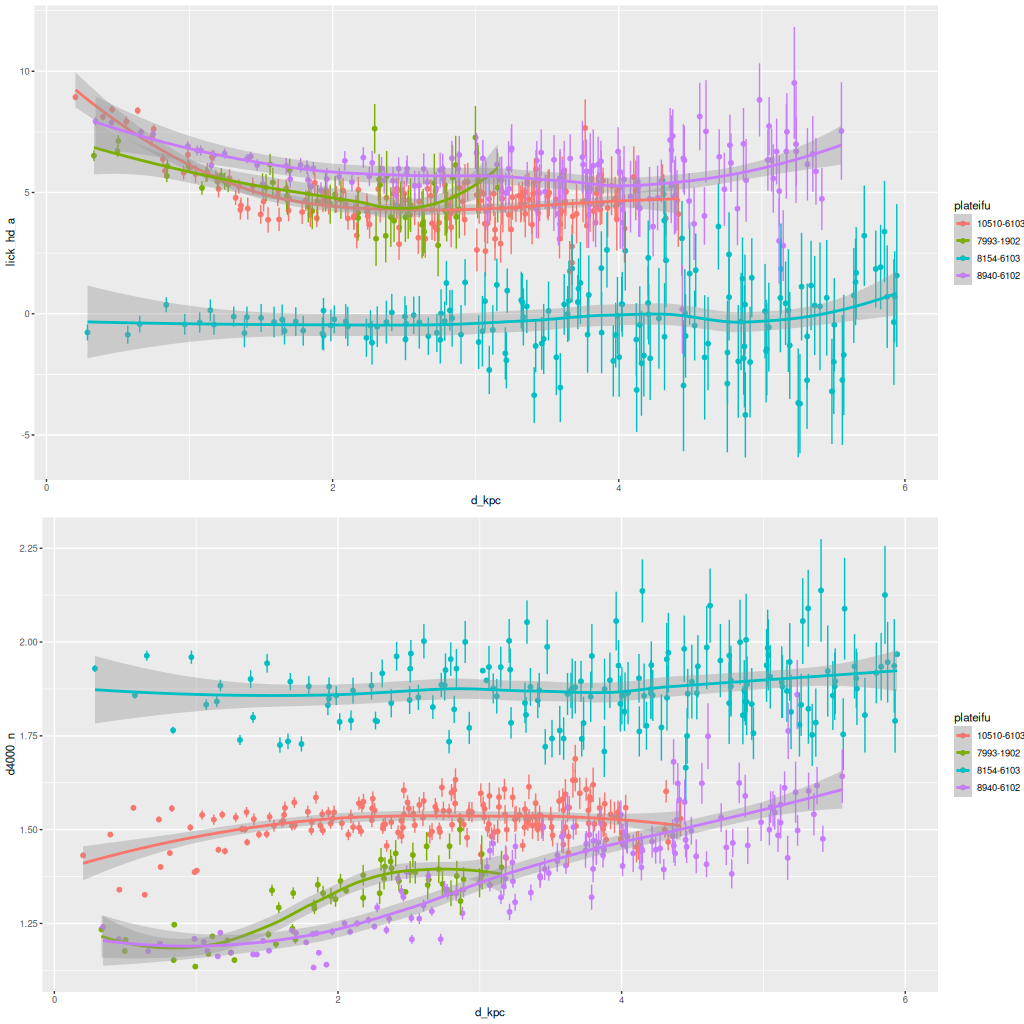
My measurements agree reasonably well with those of Haines et al. All three of the most disturbed galaxies have central Hδ indexes > 5Å with NGC 3921 (plateifu 10510-6103, nyu541044) having a larger central value and steeper gradient in the inner few kpc than the two pE/SPM galaxies. The fourth galaxy shows no obvious trend in either index with radius2The next several plots show trend lines for each galaxy computed by fitting simple loess curves to the data using the default parameters in ggplot2. These, and especially the confidence bands included in the plots, should not be taken seriously!. The central values where the S/N is highest are in good agreement.

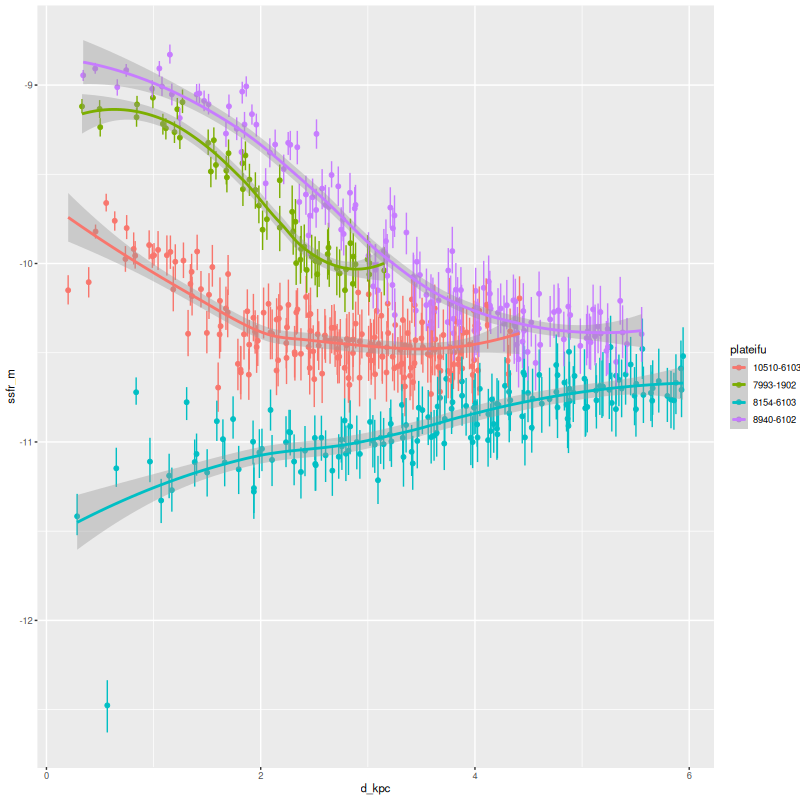
Lets turn to the results of star formation history models, which I ran on all 4 data sets. First, here are 100Myr averaged star formation rate density and specific star formation rate versus distance:

Star formation rate density vs. distance from IFU center (kpc) for 4 disturbed early type galaxies.
Specific star formation rate density vs. distance from IFU center (kpc) for 4 disturbed early type galaxies.

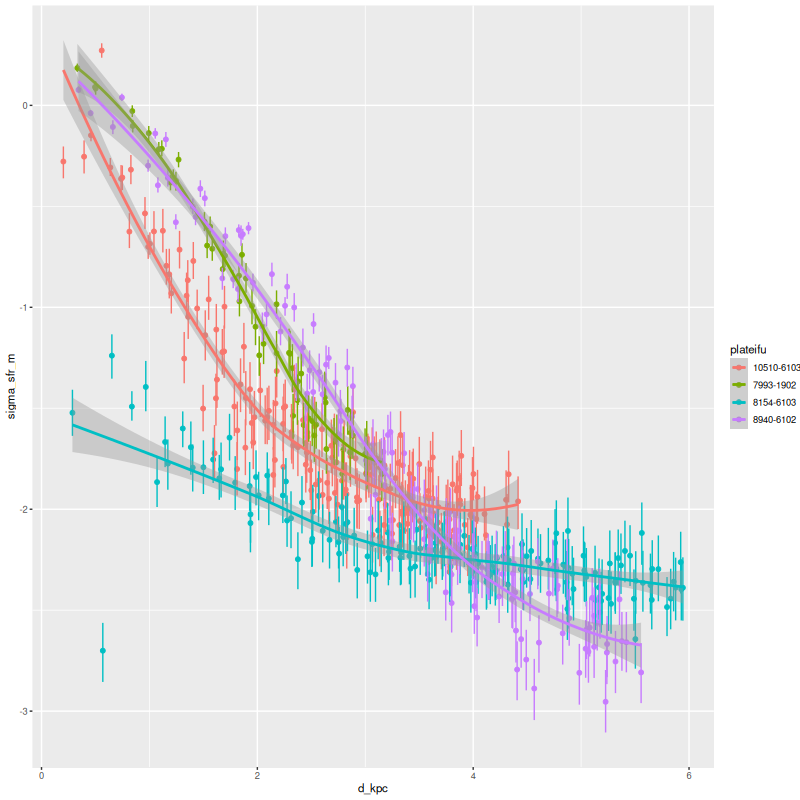
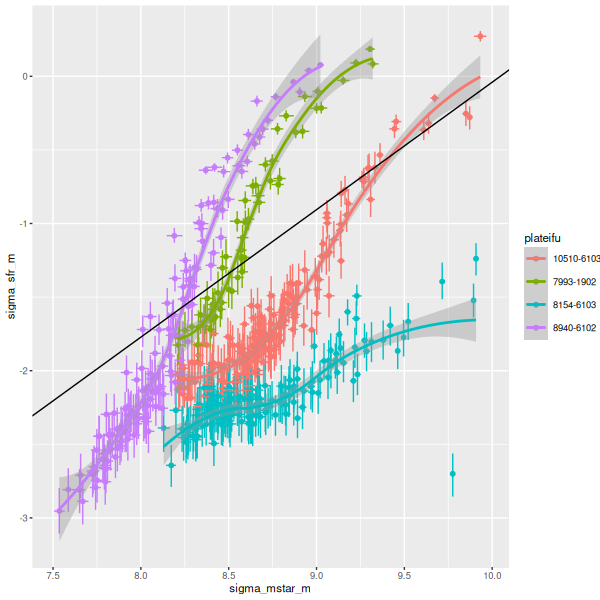
Three of these galaxies are clearly experiencing centrally concentrated episodes of star formation, and two are at or near starburst levels in specific star formation rate near their centers. As seen below two of these straddle my estimate of the “spatially resolved star forming main sequence” while the one presumed post-starburst galaxy reaches it in the central region.

mstar_sfr_4spm
Star formation rate density versus stellar mass density for 4 disturbed early type galaxies

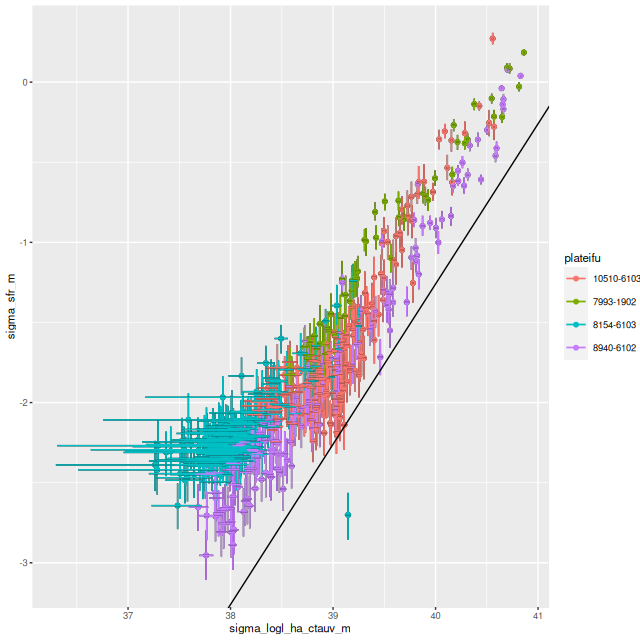
As I’ve shown several times before there’s a reasonably tight linear relationship between modeled star formation rate and Hα luminosity density. The plot shows Hα luminosity density corrected for modeled stellar redenning, which certainly underestimates attenuation in emission regions. The modeled star formation rates are consistently above the Kennicut relation shown as the straight line as I’ve seen in every sample I’ve looked at.

Star formation rate density vs. Hα luminosity density for 4 disturbed early type galaxies

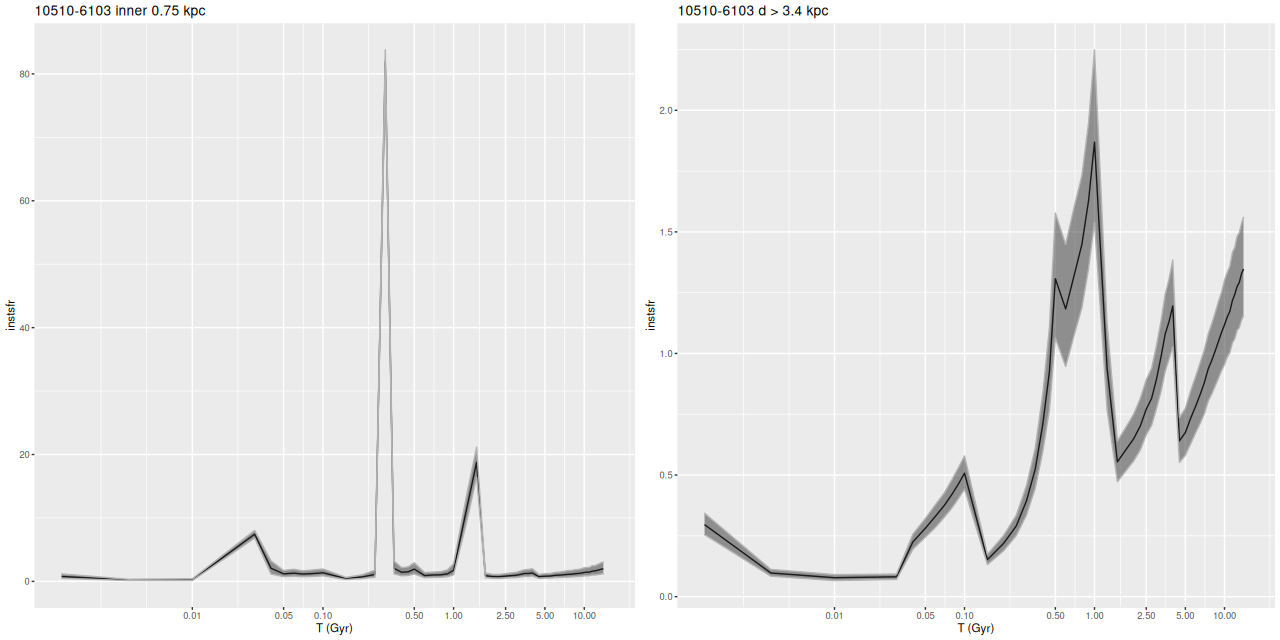
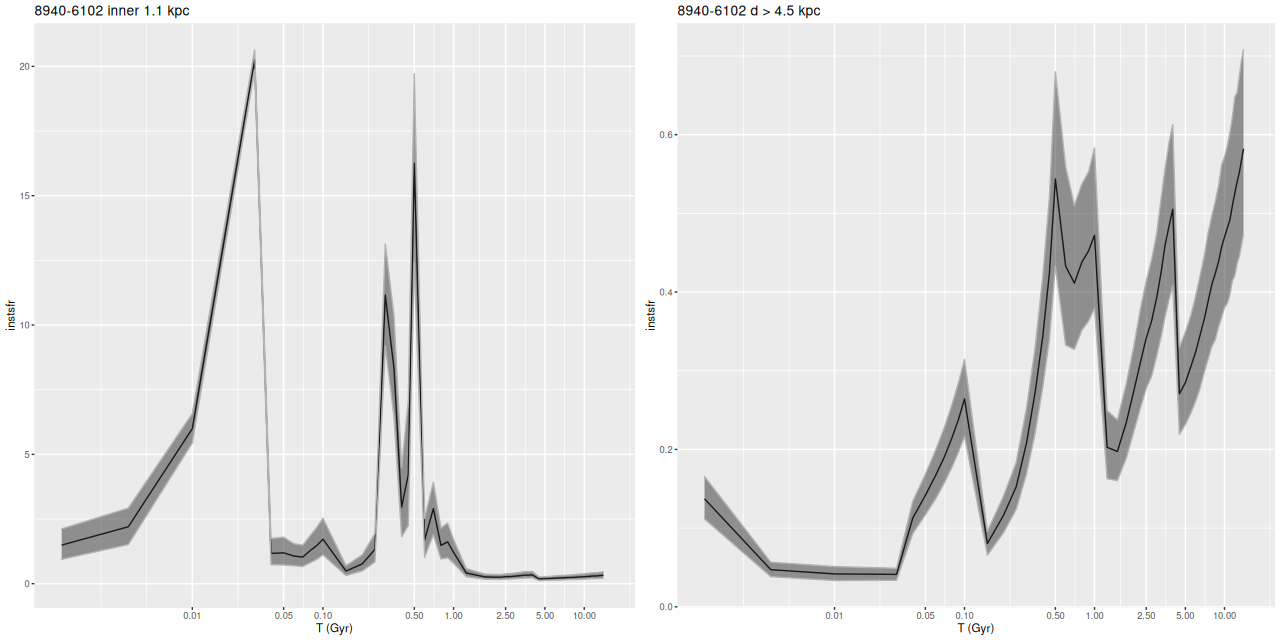
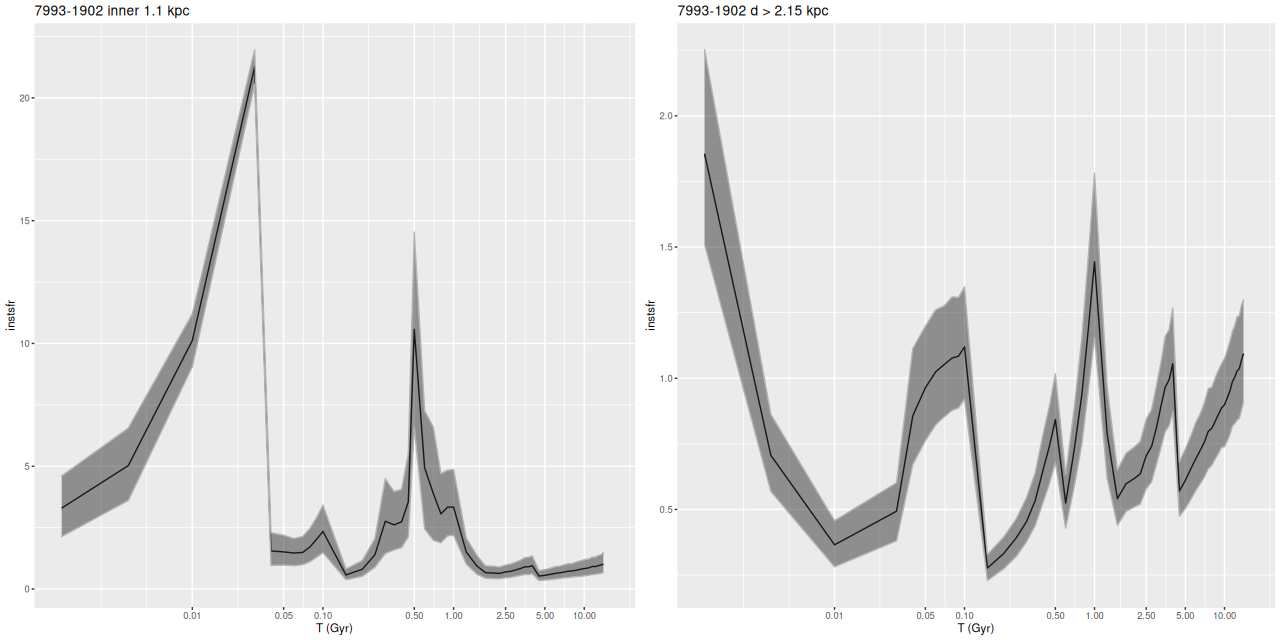
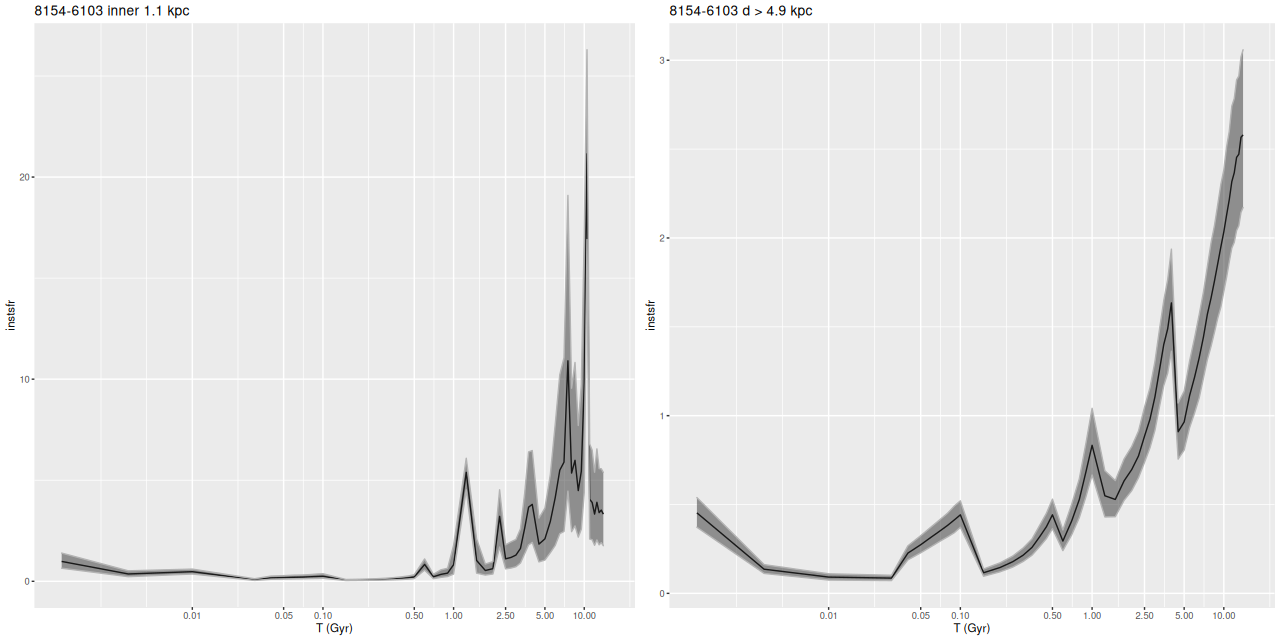
Finally, lets take a look at detailed star formation histories. Instead of my usual practice of plotting them all in a grid here I just display 2 binned star formation histories. One comprises the innermost 7 bins, which since the fibers are arranged in a hexagonal grid should form a regular hexagon around the IFU center. These range in “radius” from about 0.75 to 1.1 kpc in these four galaxies. The second is for an “annulus” in approximately the outer kpc of each IFU. The extent of the IFU footprints ranges from 3.1 to 5.9 kpc. I calculate these by summing the contributions in each SFH model contributing to the bins, not by running new models for binned spectra. Since the dithered fiber positions overlaps this overestimates the total mass in each bin, but I care about the shape and timing of events rather than the absolute values of star formation rate estimates.

The next 4 plots display the results. Lookback time is logarithmically scaled with the same range and ticks for each SFH. Vertical scales are linear and differ for each graph. The graphs are in the same order as the basic information table above. As I’ve written before these models “want” to have smoothly varying mass per time bin which has the unfortunate effect of producing jumps in the apparent SFR when the bin widths change. In the BaSTI isochrone based SSP models these occur at 100 Myr, 1 Gyr, and 4 Gyr and can sometimes be quite prominent.

With caveats out of the way the one clear post-starburst in the sample had (per the model) a powerful and short starburst at ≈300 Myr lookback time, with a small amount continuing to the present (this can’t be seen at the scale of the graph, but ongoing star formation is ~1 M/yr). The total mass contribution from the burst and subsequent star formation is around 15%.

The two apparent ongoing starbursts have later bursts of star formation that are slightly weaker in terms of total mass contribution and peak star formation rate, but still quite significant. All three of the starburst/post-starburst galaxies appear to have had two major waves of late time (last ~2 Gyr or less) star formation. As I’ve written before in merger simulations the progenitors usually complete a few orbits before coalescence, with some enhanced star formation around each perigalactic passage. I hesitate to take these models that literally.

Turning finally to the last and least disturbed galaxy, NGC 1149, despite the bursty appearance of the SFH there’s no evidence for a major starburst in the cosmologically recent past. Whether an older starburst can be detected in this kind of modeling approach needs investigating.

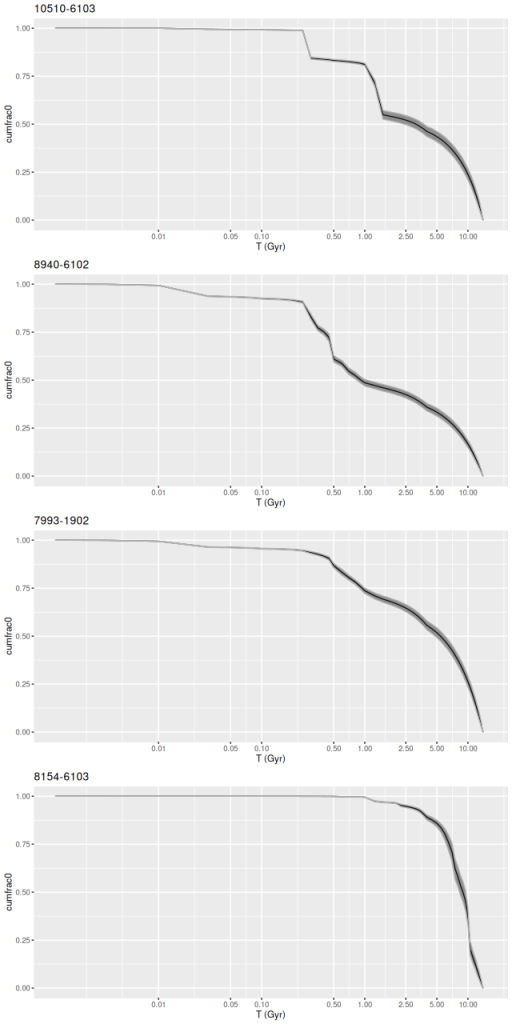
One last set of graphs that may be useful. These show cumulative star formation histories — basically the cumulative sum of mass contributions starting from the oldest time bin. This is similar to a mass growth history which is a popular visualization. In my calculation of the latter the contributions are to the present day stellar mass, so an allowance for mass loss and remnant mass is made3these come from the source of the SSP models and are themselves models. Probably they are somewhat better than guesses. These things are basically black boxes to users.. The graphs are for the central regions only. Note the major virtue of these is that the contributions of major episodes of star formation can be estimated at a glance.

Cumulative star formation histories for central regions of 4 disturbed early type galaxies

To wrap up this part of the post 3 of these galaxies are compatible with the “modern merger hypothesis,” that is they have experienced centrally concentrated but spatially wide spread starbursts. The reason two of them don’t have post-starburst characteristics in the Hδ – D4000 plane is their starbursts are still underway. The current burst of star formation contributes about 5-10% of the mass in the central regions of these two. How much more is available is unknown (at least to me until I get around to finding out if there are HI mass estimates available).

Future plans: I’ve completed model runs on the 24 “post-starburst” galaxies in the MaNGA ancillary program dedicated to them. I may have something to say about them. I also may have something to say about one of the Zoogems targets that I had a small part in selecting.

Continue reading “Journal notes: Haines et al. (2015), “Testing the modern merger hypothesis…””